Description
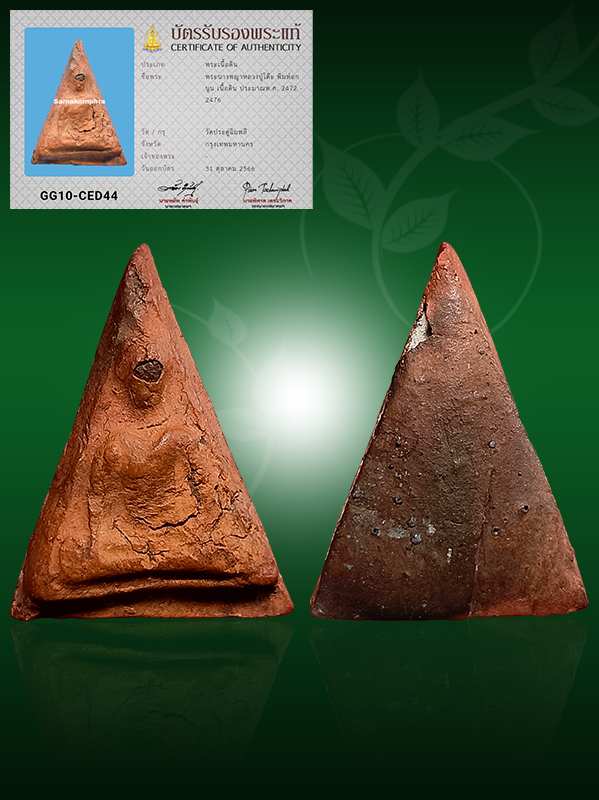
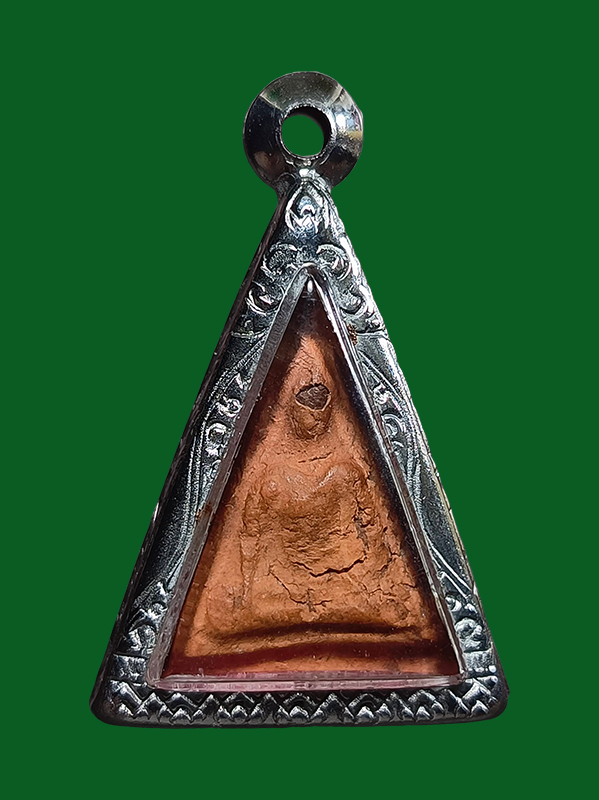
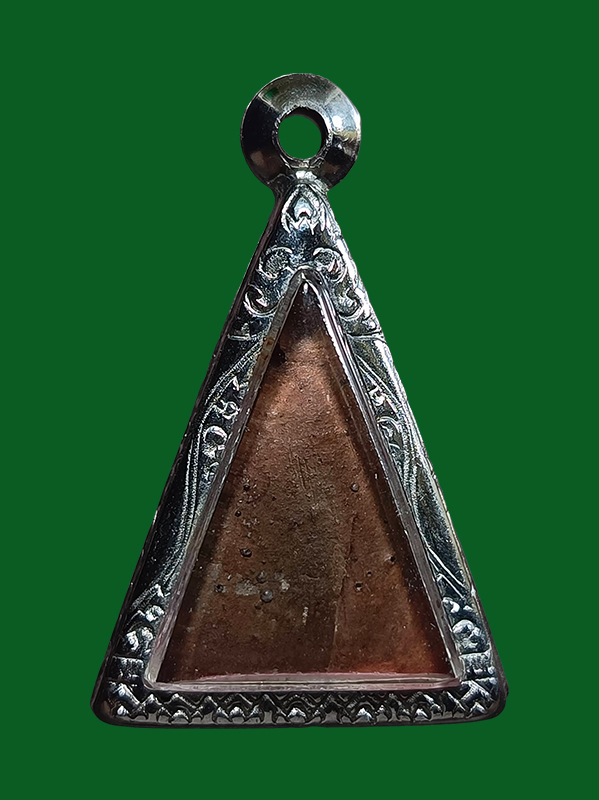
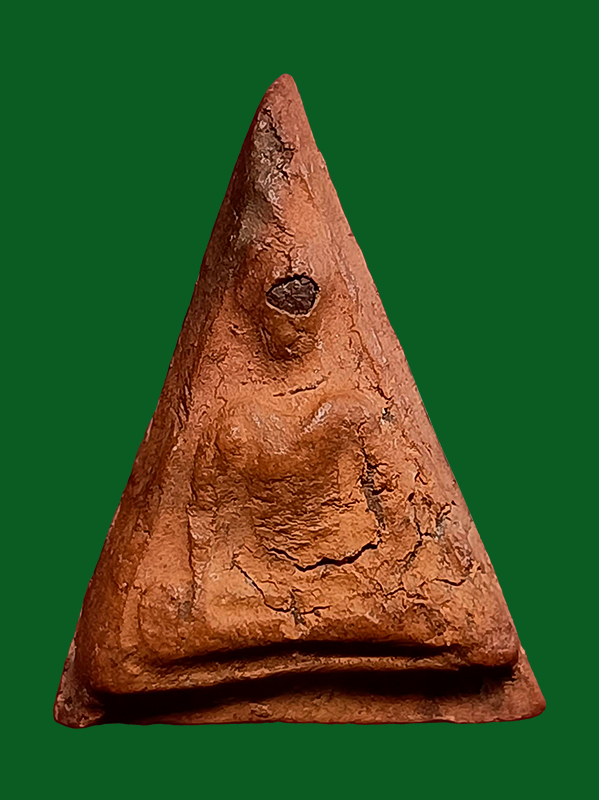
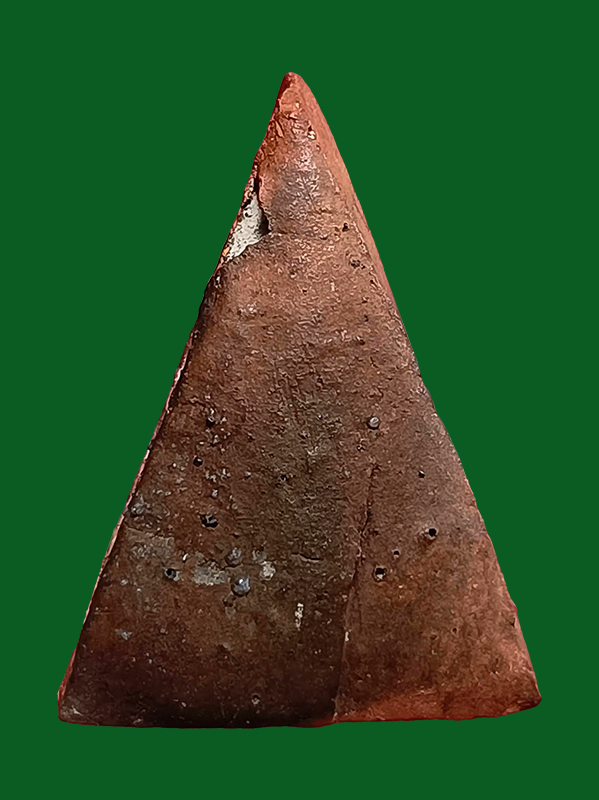
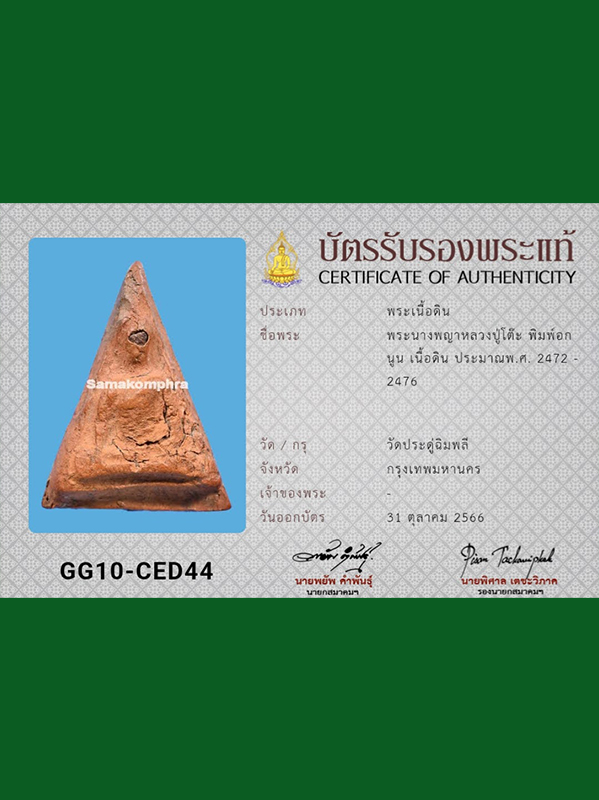
Phra Nang Paya Lp Toh Wat Pradochimplee B.E.2472-2476 with SMK cert
- Made of baked clay
- Phim “Aok Noon” (Big chest)
- Nice condition
- With SMK cert card
- Guarantee real 100%
Production Information: Phra Nang Phaya, Luang Pu Toh, Wat Pradu Chimphli (B.E. 2472 – 2476)
This series of Phra Nang Phaya is the first generation of clay amulets created by Luang Pu Toh. The technical data is as follows:
1. Purpose and Production Process
-
Production Period: Commenced in 1929 (B.E. 2472) and concluded in 1933 (B.E. 2476).
-
Method: Hand-pressed within the temple. Luang Pu Toh personally supervised the mixing of materials and the pressing process, assisted by monks and novices at Wat Pradu Chimphli.
2. Key Mass Materials (Muan Sarn)
-
Sacred Powders: “Phong Putthakhun” (sacred powders) derived from Luang Pu Toh’s own inscription and erasure of sacred scriptures.
-
Ancient Amulet Fragments: Broken fragments from Phra Somdej Wat Rakang, Phra Somdej Bang Khun Phrom, and Phra Kru Wat Phlap.
-
Clay: Fine-textured clay mixed with sacred powders, fired according to traditional methods.
3. Physical Characteristics and Artistry
-
Iconography: The Buddha image is in the “Mara Vichaya” (Subduing Mara) posture, seated on a single-tier base within a triangular frame.
-
Material Texture: Baked clay (baked soil) mixed with a high concentration of sacred powders, resulting in a texture that is both firm and refined.
-
Coloration: Variations depend on the firing temperature, ranging from brick red, light brown (Pikul flower color), green, to black (rare).
-
Identity Markers: Fingerprints from the pressing process are often visible on the back. Edges typically show marks from being cut with traditional bamboo strips or sharp tools.
4. Classification of Molds (Pim)
The amulets are classified into popular categories as follows:
-
Pim Na Tewada (Angel Face / Large Mold)
-
Pim Na Tanan
-
Pim Ok Noon (Bulging Chest)
-
Pim Sangkati (Monastic Sash)
5. Consecration and Storage
-
Luang Pu Toh performed solo consecration (Pluk-sek) over several Lenten seasons (Pansa).
-
A portion was distributed immediately, while another portion was stored above the ceiling of the Wat Pradu Chimphli ordination hall (Ubosot) and officially released from the “Kru” (chamber) later.
龙婆多(Luang Pu Toh)瓦巴鲁清批寺(Wat Pradu Chimphli)南帕亚佛(Phra Nang Phaya)制作信息(佛历 2472 – 2476)
这批南帕亚佛牌是龙婆多大师早期督造的第一批烧土质(粘土)佛牌,其详细核心信息如下:
1. 制作目的与工艺
-
制作年份: 始于佛历 2472 年(公元 1929 年),约在佛历 2476 年(公元 1933 年)完成。
-
制作方式: 在寺庙内手工压模。龙婆多大师亲自监督圣料混合过程,并与寺内僧侣、沙弥共同手工压制。
2. 核心圣料
-
经粉(Phong Putthakhun): 龙婆多大师亲自书写并抹除的经文粉。
-
古佛碎料: 包含瓦拉康崇迪(Somdej Wat Rakang)、曼坤碰崇迪(Somdej Bang Khun Phrom)以及瓦普寺(Wat Phlap)出土古佛的碎料。
-
粘土: 经过筛选的细质粘土,混合大量圣粉后,按照传统工艺烧制。
3. 物理特征与艺术风格
-
佛相特征: 佛陀呈现“伏魔印”(姿态),禅定于单层法座之上,整体呈等腰三角形。
-
材质感: 属于烧土质地,由于混合了大量经粉,质地坚硬而显得细腻温润。
-
色泽: 颜色因烧制温度而异,包括:砖红色、陶土色、淡黄色(花粉色)、绿色及黑色(较罕见)。
-
防伪特征: 背面通常带有手工压模留下的手指印,边沿可见竹片或利器切割的痕迹。
4. 模具分类(Pim)
收藏界主要分为以下几种模具:
-
天使脸模(Pim Na Tewada / 大模)
-
踏喃脸模(Pim Na Tanan)
-
胸部凸起模(Pim Ok Noon)
-
僧伽梨模(Pim Sangkati)
5. 加持与存放
-
龙婆多大师亲自单独自加持多年(历经多个守夏节)。
-
部分佛牌在当时即分发给信众,另一部分则存放在瓦巴鲁清批寺大雄宝殿的房顶天花板内,后期才正式出塔供信众请罢。