
“Where to Begin? A Complete Guide to Studying Thai Amulets” (Chapter 2)
17/06/2026
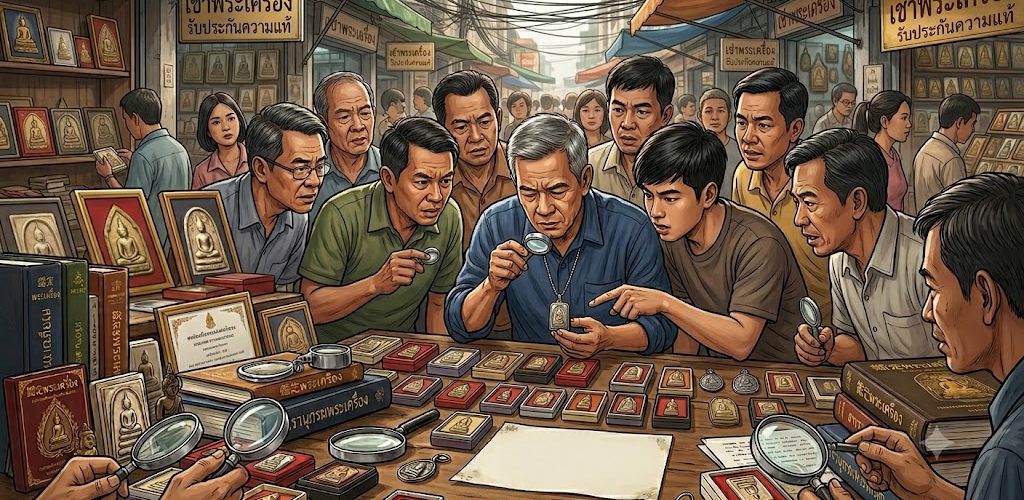
Deep Dive into Amulet Authentication: Decoding “Material, Nature, and Creation” – From Novice to Master!
After passing the first test of examining the “Mold and Shape” (the physical appearance and proportions of the amulet), it is time to level up and dive deep into the “Material”, which acts as the “DNA” of each amulet!
In amulet collectors’ terms, “Material” refers to the main substances used to create that specific piece—whether it is sacred powder, baked clay, Chin (a lead-tin alloy), mixed metals, or various medicinal herbs. The golden rule for authenticating materials is: “Each temple’s material has its own unique, uncopyable signature.”
Let’s picture this simply. Suppose we are looking at “Powder Amulets”:
- Somdej Wat Rakang or Wat Prasat lineage: The material will look “fluffy, soft, and moist” to the eye. It is visually soothing, almost like well-baked, premium bread.
- Luang Pu Phueak, Wat King Kaeo lineage: The material takes a different route. It looks “sticky, wrinkled, and fluffy,” but the fluffiness is not quite at the Wat Rakang level. Just like different dough recipes yield different textures!
It is no different from recognizing a person’s face. To put it bluntly: “You must memorize the overall signature of each amulet’s material by heart!” There are two basic steps to mastering this:
- Know the Name and Face: First, research what the material of your amulet is called and what its core ingredients are. Memorize the character of that material as your baseline.
- Examine Until It Sinks In: Pick up your loupe! Even if you only have one amulet, examine it morning and night. Memorize every wrinkle, pore, and tiny speck of material. If you have the budget, get original authentic pieces or amulets from other monks to compare. As you keep examining, your eyes will get “used to the look,” and your brain will automatically register it.
When “Material” Meets “Mold”: The Next Key is “Nature”
True amulet experts often throw around the word “Nature”. But what exactly is it? Simply put, Nature means “the traces of time” or the aging of the materials and metals. An amulet that is 10, 50, or 100 years old will never have the same surface texture.
Studying age and nature revolves around two main pillars:
- High Flight Hours: You must frequently examine authentic amulets through a loupe. (There is no escaping this!)
- Look with “Knowledge,” Not Just Blind Memory: Constantly staring at an amulet and just memorizing “this looks old” or “this doesn’t look old enough” without understanding the why will drastically slow down your progress. Without proper guidance, you might even drift off-course and end up buying artificially aged fakes.
The Ultimate Secret: “The Manufacturing Process”
Here is the absolute highlight of this article! Whether you are studying powder or metal amulets, what will truly “open your eyes” and make your authentication razor-sharp is understanding “the manufacturing process of that specific era.”
Think of it like being an investigator. If we understand the creation process, we will fully grasp the logic behind the amulet:
- Why is Wat Rakang’s Somdej fluffy and moist? Because the core ingredients, the fermentation process, and the ancient hand-pressing method naturally create pores and shrinkage.
- Antique Cast Metals: After a century, how does the metal react with oxygen (oxidation)? How do the patina, rust, dullness, or vibrancy manifest in different spots?
- Vintage vs. Modern Stamped Coins: A metal stamping machine from 80 years ago, along with its cutting blades, leaves entirely different impact marks and edge-cuts compared to today’s computer-controlled machines!
When you combine the knowledge of “Material + Nature + Production Process,” it becomes an ultimate shield. You will be able to separate the “authentic” from a “mountain of fakes” almost like magic. Sometimes, just feeling the tension of the surface or catching a glimpse of the cut edges is enough to know the truth!
The ultimate goal of all this is simply hoping that everyone interested in amulets starts studying them “seriously and correctly.” Understand the cause and effect behind the materials so that one day, you can walk through the amulet market with confidence, avoid getting scammed, and proudly become someone who truly “knows how to authenticate!”
深入探究佛牌鉴定:解码“材质、自然痕迹与制作工艺”——从新手到专家的必修课!
在我们通过了观察佛牌 “模具与形态”(即佛牌的外观和比例)的第一关后,现在是时候升级,深入了解佛牌的 “材质(肉质)” 了,这可是每尊佛牌的“DNA”!
在佛牌圈的术语中,“材质” 指的就是用来制作该佛牌的主要用料——无论是圣粉、烤土、铅锡合金(Chin)、混合金属,还是各种草药。鉴定材质的黄金法则是:“每个寺庙的材质都有其无法被复制的独特标志(签名)。”
让我们简单地想象一下,假设我们看的是 “粉牌”:
- 瓦拉康(Wat Rakang)或瓦巴萨(Wat Prasat)派系: 材质看起来会有一种“蓬松、柔软、润泽”的感觉。看起来非常赏心悦目,就像烤得恰到好处的高级面包。
- 瓦劲缴寺(Wat King Kaeo)龙婆不派系: 材质则走另一种风格,看起来“黏稠、有褶皱、蓬松”,但蓬松度不及瓦拉康。这就好比配方不同的面团,必然会呈现出不同的质感!
这和认人脸没什么区别。直白地说:“你必须把各派系佛牌材质的整体特征牢记于心!” 掌握这门功夫有两个基本步骤:
- 知其名,识其面: 首先要查阅资料,了解你手中的佛牌材质叫什么,主要成分是什么,并将该材质的特征作为基础知识牢记。
- 不断观察直到刻入脑海: 拿起你的放大镜!就算只有一尊佛牌,也要早晚端详。要把每一道褶皱、每一个气孔、每一粒微小的用料都尽可能记下来。如果资金允许,找一些原版真品或其他师傅的佛牌来对比观察。看得多了,你的眼睛就会“习惯”,大脑也会自动记录下这些特征。
当“材质”遇上“模具”:下一个关键是“自然痕迹”
真正的佛牌专家经常会把 “自然痕迹” 挂在嘴边。那这到底是什么呢? 简单来说,自然痕迹就是 “岁月的痕迹”,也就是材质和金属的老化程度。10年、50年和100年历史的佛牌,其表面皮壳绝不可能是一样的。
研究老化的程度,有两个核心支柱:
- 高强度的实战经验: 必须经常拿真牌来用放大镜观察。(这一条绝对绕不开!)
- 带着“知识”去观察,而不是“鹦鹉学舌”: 如果只是死记硬背“这样就是老”或“这样还不够老”,而不懂背后的原理,你的进步会非常缓慢。如果没有正确的指引,你甚至可能会走偏,最终买到做旧的假牌。
终极秘籍:“制作工艺”
接下来是本文的重头戏!无论你是研究粉牌还是金属牌,真正能让你 “豁然开朗”、看牌稳准狠的关键,在于了解 “那个时代的制作工艺”。
这就像是当侦探(CSI)。如果我们了解了制作过程,就能彻底弄懂佛牌的逻辑:
- 为什么瓦拉康的崇迪佛牌会显得蓬松润泽? 因为其核心原料、发酵过程以及古代的手工压模技术,自然而然地产生了气孔和收缩。
- 古法倒模混合金属佛牌: 历经百年,金属与空气发生反应(氧化),金属的皮壳在不同的部位是如何产生铜锈、褪色或呈现出鲜艳色泽的?
- 早期压模硬币 vs. 现代压模硬币: 80年前的金属冲压机和切边刀片,留下的冲击痕迹和切边特征,与当今电脑控制的机器有着天壤之别!
当我们将 “材质 + 自然痕迹 + 制作工艺” 的知识结合在一起时,它就会变成一面顶级的盾牌,让你能够像变魔术一样,从“假牌山”中一眼挑出“真牌”。有时候,仅仅是触摸一下表面的张力,或者瞥一眼切边的痕迹,就足以辨别真伪了!
这一切的最终目的,只是希望所有对佛牌感兴趣的人,都能开始 “认真且正确” 地学习。了解各种材质形成的前因后果,这样有朝一日,你就能自信地漫步在佛牌市场,不再上当受骗,并自豪地成为一个真正“懂看佛牌”的行家!