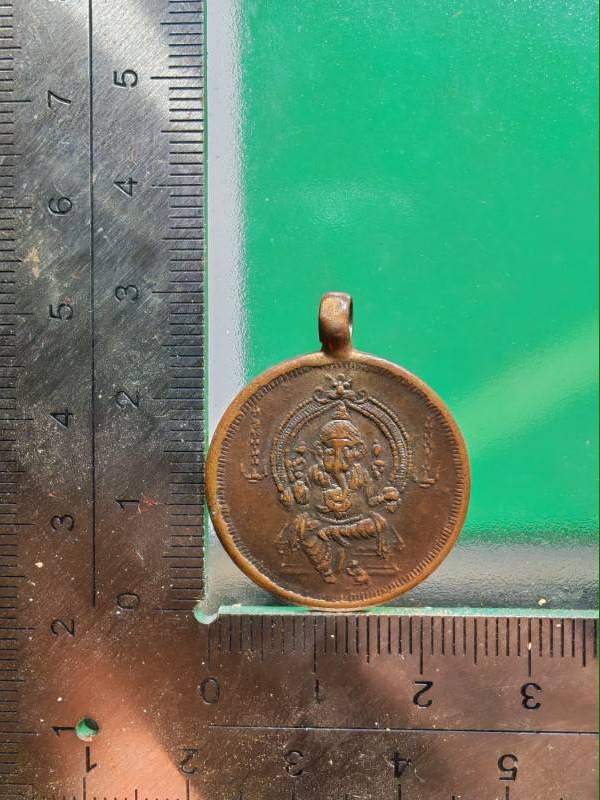
Description
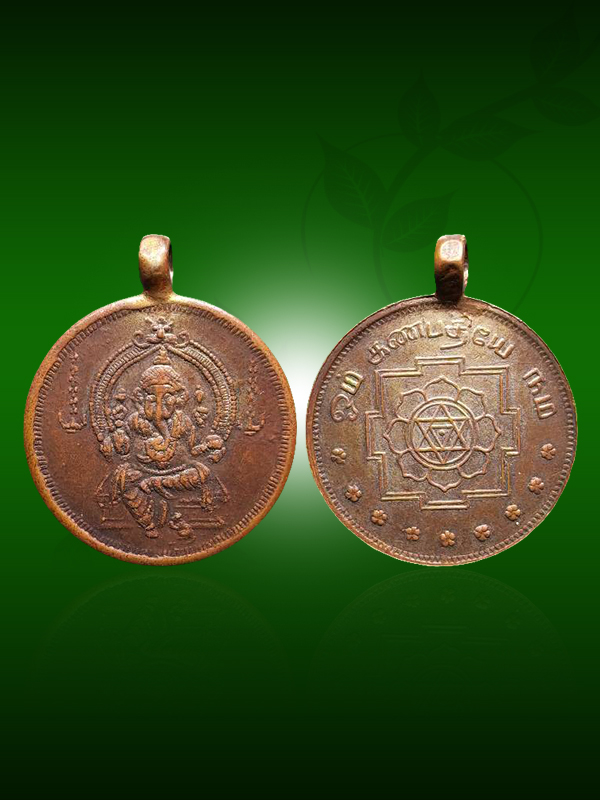
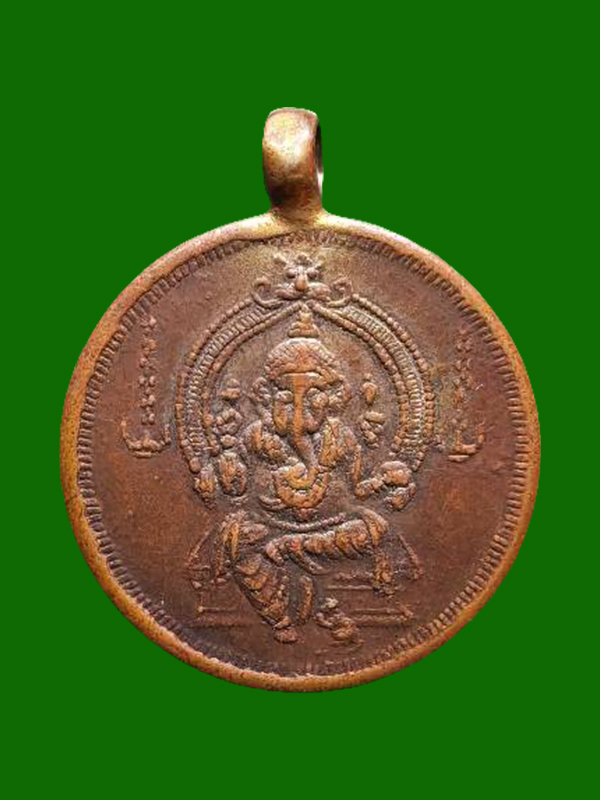
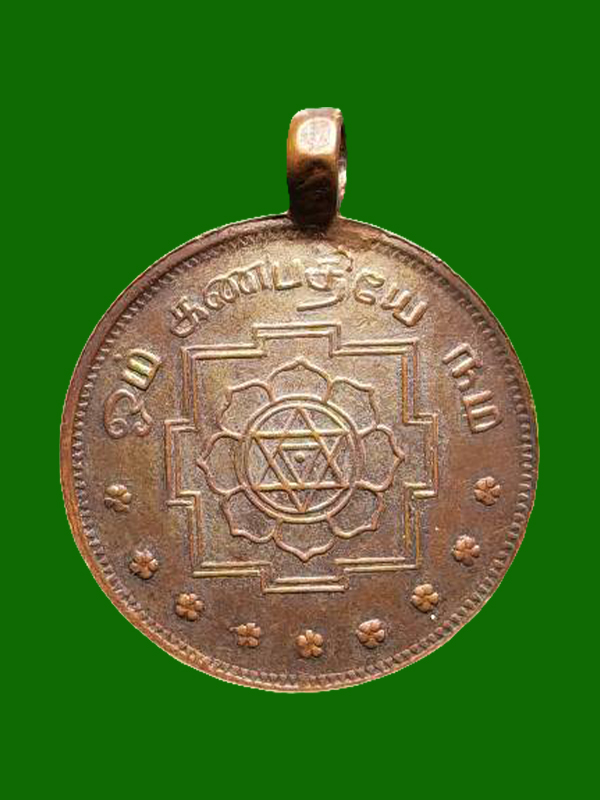
Rian Ganesh Wat Khak (Silom) B.E.2490
- Made of copper
- Good condition
- Wat Khak is Hindu temple at Silom,Bangkok
- Guarantee real 100%
History and Creation Details of the Ganesha Medal, Wat Khaek Silom, Copper Material, Approximately B.E. 2490–2500
The Ganesha Medal (or Phra Phikhanet Medal) from Wat Phra Sri Maha Umathewi (commonly known as Wat Khaek Silom), Silom Road, Bangkok, is a highly popular Hindu sacred object, especially among Thai-Indian communities, people of Indian descent, and devotees of the deity of success, business, fortune, and obstacle removal. This temple is one of Bangkok’s oldest Hindu temples, established during the reign of King Rama V (around B.E. 2453 onward) primarily for the worship of Goddess Sri Maha Umathewi (Goddess Parvati, consort of Lord Shiva), with Lord Ganesha (son of Shiva and Parvati) as one of the central deities worshipped alongside her.
Background of Creation of Ganesha Medals in Copper Material, Approximately B.E. 2490–2500 In the post-World War II period (roughly B.E. 2490–2500), Wat Khaek Silom began producing the earliest batches of Ganesha medals to distribute to disciples and devotees. This was during a time when the temple remained the central hub for the Indian community in the Silom-Sathorn area. Medals from this era were typically made of copper (red copper or occasionally lightly gilded copper), as the material was readily available, durable, and suitable for small-scale production (mass production only became common much later, from around B.E. 2530 onward).
Medals from this approximate period are considered early vintage pieces, often featuring thin round shapes with ridged edges, horizontal attachment loops (hanging loops welded crosswise), and Indian-style dies/blocks. The front usually depicts Lord Ganesha seated or standing on his vahana (the mouse), with a halo or lotus base. The reverse commonly bears Hindu yantras, the Sri Chakra Mahayantra, or other religious symbols. Some molds are small in size (about 2–3 cm) and many retain their original welded hanging loops.
These early 2490–2500 medals are regarded as the ancient first-generation issues of Wat Khaek Silom (predating the more famous and larger-production runs of 2514, 2537, 2539, etc.). They are extremely rare today due to limited production numbers (made mainly for distribution and worship, not commercial sale), lack of exact records, and over 70 years of age, resulting in beautiful natural patina—deep red or jet black—with strong, durable metal.
Copper Material (Main Content of This Era) Red copper was the primary material used in the B.E. 2490–2500 period. Over time, authentic pieces develop a stunning natural fire skin (patina). Some show old residues or classic aged coloration. Pristine examples are very scarce due to the great age. The spiritual power (or divine efficacy) emphasizes success in endeavors, business prosperity, wealth attraction, obstacle removal, and great charm (metta mahaniyom), especially within Hindu-Thai traditions.
Medal Molds (Phim)
- Main mold: Thin round shape, ridged edge, horizontal welded loop, Indian-style block/die
- Front: Main depiction of Lord Ganesha (seated or standing)
- Back: Hindu yantra, Sri Chakra Mahayantra, or religious symbols
- Size: Small to medium (2–3 cm), some with original hanging loop intact
Consecration and Quantity Created under the supervision of the temple committee and Brahmin priests at the temple (following traditional Hindu rituals rather than Thai Buddhist monk consecration). No exact production numbers were recorded, but output was very limited. These medals are now extremely rare in the amulet market and are treasured as the earliest vintage Ganesha pieces from Wat Khaek Silom, highly regarded among devotees of Lord Ganesha and collectors of Hindu/Wat Khaek lineage items.
เหรียญพระพิฆเนศ วัดแขกสีลม เนื้อทองแดง ประมาณปี พ.ศ. 2490-2500 的历史与制作详情(中文翻译)
เหรียญพระพิฆเนศ(或称พระพิฆเนศวร奖章)出自泰国曼谷 วัดพระศรีมหาอุมาเทวี(俗称 วัดแขกสีลม),位于Silom路,是极受欢迎的印度教圣物,尤其在泰籍印度人、印度裔社群以及信奉成功、生意、财富与排除障碍之神的信众中备受推崇。该寺是曼谷最古老的印度教寺庙之一,建于拉玛五世时期(约佛历2453年起),主要供奉女神 พระแม่ศรีมหาอุมาเทวี(即帕尔瓦蒂女神,湿婆神的配偶),而 พระพิฆเนศ(湿婆与乌玛黛维之子)则是与她并列的重要神祇。
เหรียญพระพิฆเนศ เนื้อทองแดง 在大约佛历 2490–2500 年期间的制作背景 第二次世界大战结束后(大约佛历 2490–2500 年),วัดแขกสีลม 开始制作最早期的พระพิฆเนศ 奖章系列,分发给弟子与信众。当时该寺仍是Silom-Sathorn地区印度社群的中心。这一时期的奖章主要使用铜材(红铜,或偶尔轻度镀金铜),因为材料易得、耐用,且适合小规模生产(大规模生产要到佛历2530年后才普及)。
这一时期的奖章被视为วัดแขกสีลม 的早期古董批次,通常为薄圆形、边缘有凸棱、横向焊接吊环(横焊耳环)、采用印度风格模具(block อินเดีย)。正面通常描绘主尊 พระพิฆเนศ 坐姿或站姿,骑乘坐骑(老鼠),带有光环或莲花座。背面常压印印度教符咒、มหายันต์ศรีจักรา(Sri Chakra Mahayantra)或其他宗教符号。部分模具尺寸较小(约2–3厘米),许多保留原始焊接吊环。
佛历 2490–2500 年的奖章属于วัดแขกสีลม 的第一代古董批次(早于后来著名的2514、2537、2539等大批量生产批次)。如今极为稀有,因为产量有限(当时主要用于分发与供奉,而非商业销售)、缺乏确切记录,且经过70多年岁月,表面形成美丽的自然包浆——深红色或纯黑,金属坚固耐用。
เนื้อทองแดง(这一时期主要材质) 红铜是佛历 2490–2500 年期间的主要材质。历经岁月,真品会发展出极美的自然火皮(patina)。部分可见旧痕迹或经典老化色泽。因年代久远,保存完好的“极品”极为罕见。其神力(或神圣功效)主要体现在事业成功、生意兴隆、招财、排除障碍,以及大慈悲人缘(metta mahaniyom),尤其在印度教-泰国传统中特别显著。
奖章模具(Phim)
- 主要模具:薄圆形、边缘凸棱、横向焊接吊环、印度风格模具
- 正面:主尊พระพิฆเนศ(坐姿或站姿)
- 背面:印度教符咒、มหายันต์ศรีจักรา 或其他宗教符号
- 尺寸:小至中型(2–3厘米),部分保留原始吊环
加持与数量 由寺院委员会及寺内婆罗门祭司负责制作(遵循传统印度教仪式,而非泰国佛教僧侣加持)。没有确切的制作数量记录,但产量非常有限。如今在护身符市场上极为稀有,被视为วัดแขกสีลม 的最早古董พระพิฆเนศ 奖章,在信奉象头神(พระพิฆเนศ)的信众以及印度教/วัดแขก 系列收藏家中备受珍视。