
Description
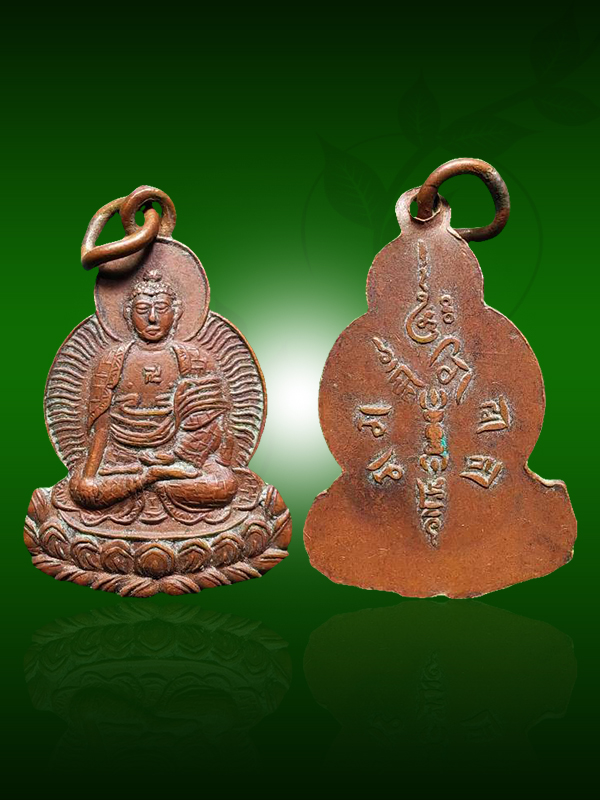
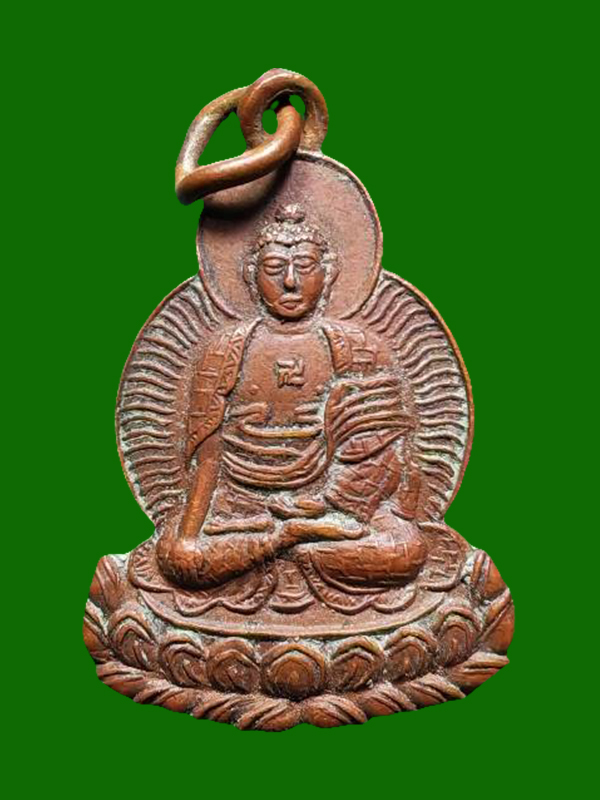
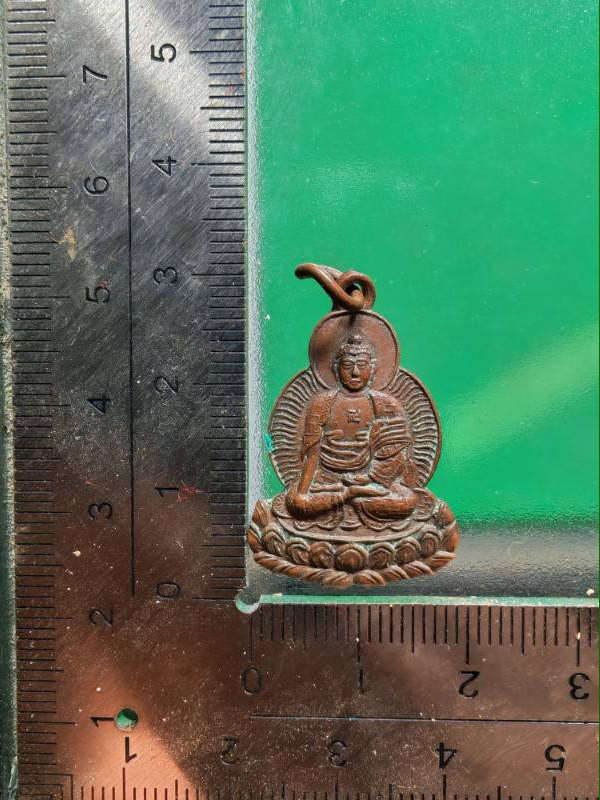
Rian Amitabha Buddha Wat Yuan Saphankhaw B.E.2482
- Made of copper
- Nice condition
- Chanted by Lp Bao An Wat Yuan Saphankhaw, Lp Opasi Arsorm Bangmod
- Rare item
- Guarantee real 100%
History and Creation Details of the Phra Yulai Medal, Wat Yawan Saphan Khao, Copper Material, B.E. 2482
The Phra Yulai Medal (also known as Phra Yulai Huk Jow Medal or round Phra Yulai medal) from Wat Samananam Borihan (commonly known as Wat Yawan Saphan Khao), Bangkok, is the first and most significant medal batch created in B.E. 2482 by Luang Pho Bao Eng (or Luang Pho Baw Eng, full name Ong Saraphan Mathuros). He was a senior monk in the Anam Nikaya lineage (Vietnamese Buddhist tradition) and former abbot of this temple. Luang Pho Bao Eng was a renowned guru monk in Bangkok, famous for his abilities in spirit communication, curse removal, and powerful spiritual efficacy, particularly in matters of wealth, prosperity, business success, and protection.
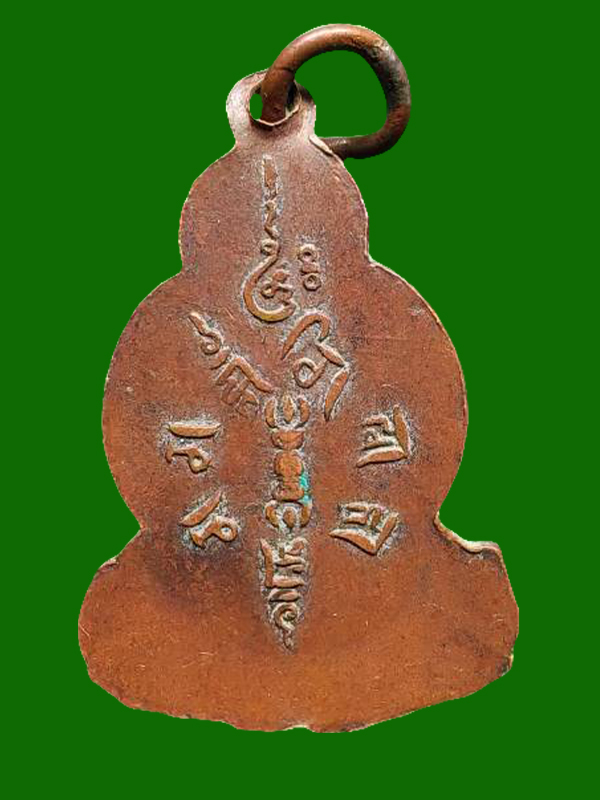
Phra Yulai refers to Shakyamuni Buddha as understood in Chinese Buddhist belief (also called Phra Yulai Huk Jow, meaning the Buddha who is far from defilements and has attained self-enlightenment). It is a Chinese-style Buddha image highly popular among Thai-Chinese devotees. The medal is round in shape (some pieces have an original loop for wearing), featuring Phra Yulai seated in meditation posture on the front, with hands in a blessing gesture or holding an object. The back is typically stamped with a yantra or Chinese/ancient script (some blocks feature a single character, which is the most sought-after variant).
Background of Creation Created in B.E. 2482 (before World War II) as sacred objects to distribute to disciples and local people. Luang Pho Bao Eng led the creation process and invited famous guru monks to join the consecration, notably Luang Pho Ophasi (from Bang Mod Ashram). Thus, venerating one of these medals is said to receive blessings from two great masters (both Luang Pho Bao Eng and Luang Pho Ophasi). The creation took place during a time when Wat Yawan Saphan Khao served as a central hub for the Vietnamese and Chinese communities in the Saphan Khao area, leading to wide distribution among Thai-Chinese devotees.
Copper Material (Main Content of This Batch) The primary and most popular material is gilded copper (or red copper with original gold plating). When the original gold wash remains intact, the medal appears very beautiful. Some pieces retain the original loop for hanging. The copper is strong and durable; over time (nearly 90 years), it develops a deep red patina or natural aged surface (fire skin). Pieces in pristine “champion” condition are now extremely rare due to the age.
Medal Molds (Phim)
- The main mold is the round type (round medal), with the back stamped with yantra or ancient script (the most popular block has a single character).
- Some variants are oval-shaped, but the round form is the standard for the 2482 batch.
- The molds were carved by the famous craftsman Kaset Mongkolcharoen, a well-known mold maker of that era, resulting in a design strikingly similar to Luang Pu Tim’s Nung Phan medal from Wat Lahan Rai.
Consecration and Quantity Luang Pho Bao Eng presided over the consecration, assisted by Luang Pho Ophasi and possibly other monks of the period. No exact production number is recorded, but output was limited (typical of that era’s smaller-scale creations). This batch is regarded as Luang Pho Bao Eng’s first famous creation and is now a rare vintage piece. It enjoys great popularity among collectors of Bangkok-lineage guru amulets and Thai-Chinese devotees, especially for attracting fortune and great charm (metta mahaniyom).
เหรียญพระยูไล วัดญวณสะพานขาว เนื้อทองแดง ปี 2482 的历史与制作详情(中文翻译)
เหรียญพระยูไล(也称为เหรียญพระยูไลฮุกโจ้ว,或圆形พระยูไล 奖章)出自泰国曼谷 วัดสมณานัมบริหาร(俗称 วัดญวนสะพานขาว),是佛历 2482 年(公元 1939 年)由 หลวงพ่อบ่าวเอิง(或หลวงพ่อบ๋าวเอิง,全名 องสรภาณมธุรส)制作的第一批且最重要的奖章系列。他是越南佛教系统(Anam Nikaya)的资深僧侣,曾任该寺住持。หลวงพ่อบ่าวเอิง 是曼谷著名的灵媒高僧,以通灵、解咒以及强大的灵力闻名,尤其在招财、生意兴隆、财富增长与护身方面特别灵验。
พระยูไล 是中国佛教信仰中的释迦牟尼佛(又称พระยูไลฮุกโจ้ว,意为远离烦恼、自证觉悟的佛陀),是中国风格的佛像,在泰籍华人中极受欢迎。此奖章为圆形(部分带有原厂吊环),正面为พระยูไล 结跏趺坐,手势为施愿印或持物,背面通常压印符咒或中文字/古文字(部分模具仅有一个字符,为最受欢迎的版本)。
制作背景 于佛历 2482 年(第二次世界大战前)制作,作为圣物分发给弟子与当地民众。由หลวงพ่อบ่าวเอิง 主导制作,并邀请知名高僧共同加持,其中最著名的是 หลวงพ่อโอภาสี(来自 Bang Mod 静修处)。因此,佩戴一枚此奖章,即可同时获得两位高僧的加持(หลวงพ่อบ่าวเอิง 与หลวงพ่อโอภาสี)。当时วัดญวนสะพานขาว 是曼谷สะพานขาว地区越南人与华人社区的中心,因此此奖章在泰籍华人信众中广泛流传。
เนื้อทองแดง(本批次主要材质) 主要且最受欢迎的材质为镀金铜(或红铜原镀金)。若原镀金层仍完整,奖章外观极为美丽。部分奖章保留原始吊环。铜质坚固耐用,经过近 90 年岁月,表面会转为深红色或自然老化包浆(火皮)。如今保存完好如“冠军品”(champion condition)的极为稀有。
奖章模具(Phim)
- 主要模具为圆形(เหรียญกลม),背面压印符咒或古文字(最受欢迎的模具仅有一个字符)。
- 少数为椭圆形,但圆形是 2482 年批次的主要样式。
- 模具由当时著名雕刻师เกษม มงคลเจริญ 手工雕刻,因此外观与หลวงปู่ทิม วัดละหารไร่ 的นั่งพาน 奖章极为相似。
加持与数量 由หลวงพ่อบ่าวเอิง 主持加持仪式,หลวงพ่อโอภาสี 及其他同时期高僧协助。没有确切的制作数量记录,但属于限量生产(那个时代产量普遍不多)。此批次被视为หลวงพ่อบ่าวเอิง 的第一款著名圣物,如今已成为稀有古董奖章。在曼谷系高僧护身符收藏家以及泰籍华人圈中极受欢迎,尤其以招财与大慈悲人缘(metta mahaniyom)功效著称。


