
Description
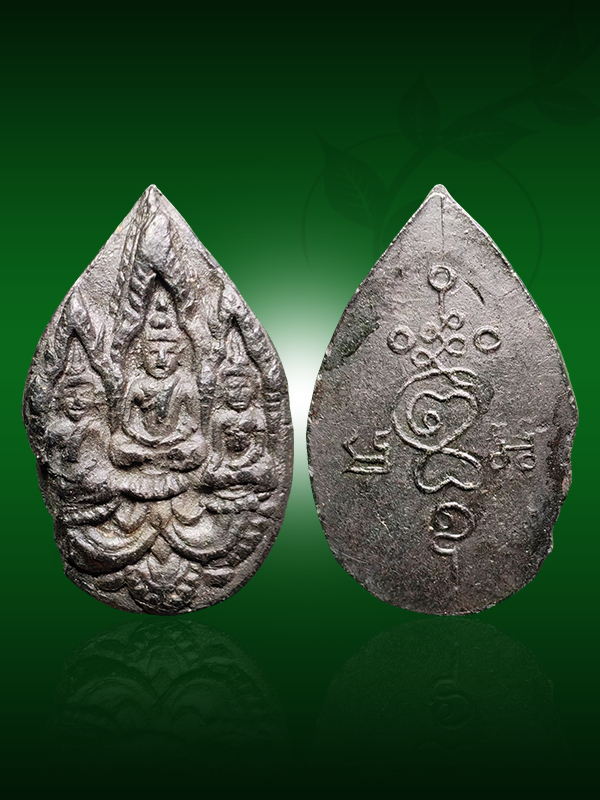
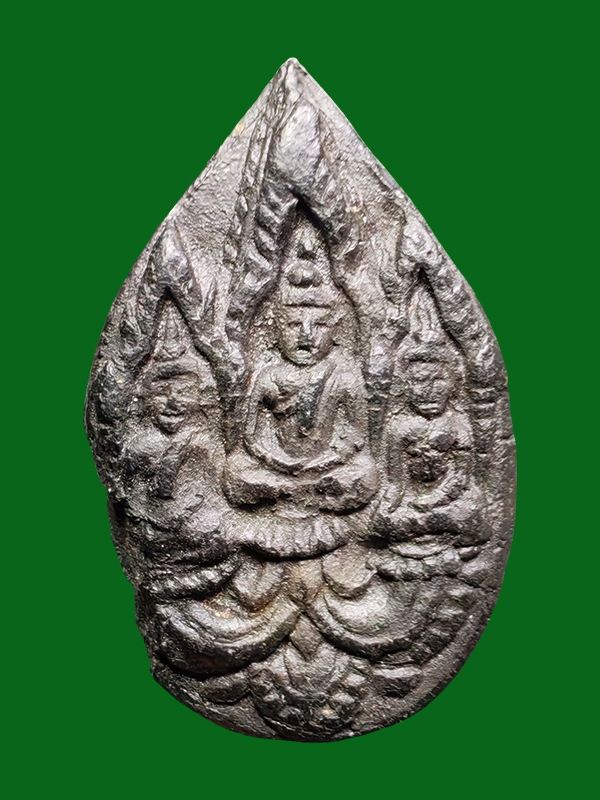
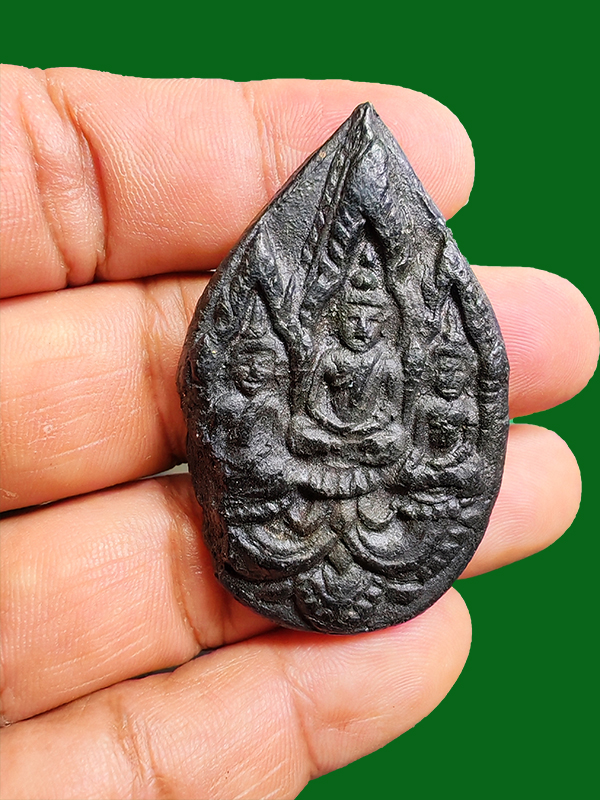
Phra Yodkhunphon (Phra Trikaya) Lp Wong Wat Tungpakkud)
- Made of Sacred powder (Bailan)
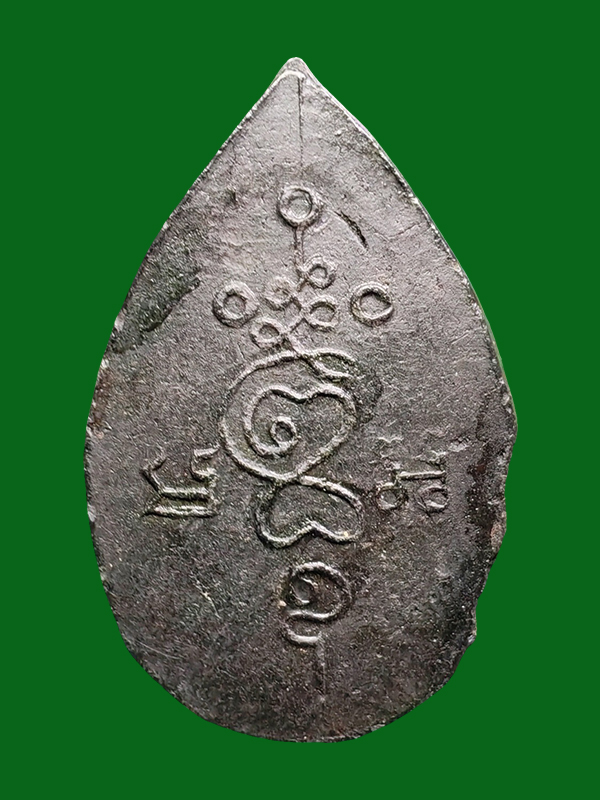
- Broken at left lower corner
- Various power
- Guarantee real 100%
Phra Yod Khun Phon (Phra Trikaya), Luang Pho Wong, Wat Tungpakkud (B.E. 2490 / 1947)
Phra Yod Khun Phon (Phra Trikaya) of Wat Tungpakkud, Nakhon Pathom Province, was created in B.E. 2490 (1947) by Phra Khru Uttrakanbodi (Luang Pho Wong Phutthasaro), the former abbot of Wat Tungpakkud and former Ecclesiastical District Officer of Kamphaeng Saen—a renowned master of sacred arts along the Tha Chin River basin.
1. Creator’s Background and Origin
-
Creator: Luang Pho Wong of Wat Tungpakkud was a direct lineage disciple of Luang Pu Boon (Wat Klang Bang Kaeo) and Luang Pho Tha (Wat Phaniang Taek). He mastered Vipassana meditation, sacred esoteric arts, and the ancient formulas for crafting baked clay-and-powder amulets.
-
Inspiration: Modeled after the classic Phra Trikaya from the Wat Phra Sri Rattana Mahathat crypt in Lopburi (one of the revered ancient Benjapakee Phra Yod Khun Phon set). It was created to perpetuate Buddhism and serve as a spiritual anchor for disciples following World War II.
2. Sacred Materials and Crafting Process
-
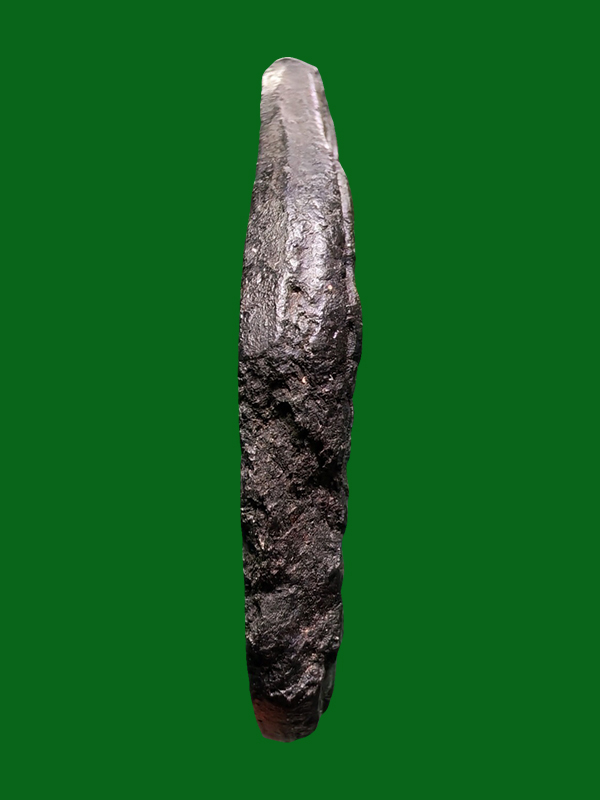
Composition: Crafted from baked clay mixed with sacred powders and charred palm-leaf manuscript ash (Nuea Din Phasom Phong Bailan), giving the amulet a dense, smooth, and resilient texture with a grayish-black to deep jet-black hue (some pieces exhibit natural whitish storage patina or soil residue).
-
Key Sacred Ingredients:
-
Auspicious earth from sacred sites and crab-mound soil (Din Khui Pu), collected according to ancient amulet-making treatises.
-
The five supreme sacred powders (Phong Pathamang, Itthije, Trinisinghe, Maharaj, and Phutthakhun), personally inscribed and collected by Luang Pho Wong.
-
Finely ground ash from aged, deteriorated palm-leaf scriptures (Bailan), blended with 108 medicinal herbs and consecrated lustral water.
-
-
Crafting Technique: Hand-pressed using traditional molds (two-piece molds or clay/slate molds), resulting in hand-trimmed edges and a smooth reverse side that often retains natural fingerprint impressions from the pressing process.
3. Iconography and Design
-
Form: A large-sized plaque amulet shaped in a triangular or arched-pavilion (Sum Ruean Kaeo) silhouette, housing three seated Buddha images in the meditation posture aligned side by side—the origin of the name “Phra Trikaya” (Three Bodies of the Buddha).
-
Design Details: The central Buddha image is slightly larger and elevated above the two flanking Buddha images within a Lopburi-style arched frame, featuring crisp, deep relief lines with a majestic and powerful presence.
-
Dimensions: Approximately 3.5 to 4.0 centimeters wide and 4.5 to 5.0 centimeters tall, making it ideal for wearing in a protective casing by collectors who favor large, commanding amulets.
4. Consecration Ceremony
-
Luang Pho Wong performed a solitary consecration ceremony inside the main ordination hall (Ubosot) of Wat Tungpakkud throughout the entire three-month Buddhist Lent (Traimas) in B.E. 2490 (1947), invoking the Triple Gem alongside the sacred lineages of Wat Klang Bang Kaeo and Wat Phaniang Taek.
5. Spiritual Virtues and Collectibility
-
Spiritual Virtues: Exceptionally renowned for commanding authority (Maha Amnat), charisma, protection from danger (Klaew Klad), and invulnerability (Kongkraphan Chatri), living up to its name Phra Yod Khun Phon (Supreme General Amulet). It is favored by civil servants, military and police officers, and leaders, while also carrying strong loving-kindness (Metta Mahaniyom) in the lineage of Luang Pu Boon.
-
Collectibility: As an early-era creation produced in strictly limited numbers (estimated in the hundreds), well-preserved pieces in baked clay mixed with palm-leaf ash with sharp facial details are rare and highly sought after by Nakhon Pathom collectors.
拍育坤喷(三身佛)龙婆翁 瓦通帕古寺(佛历2490年 / 公元1947年)
拍育坤喷(三身佛,Phra Trikaya),由佛统府瓦通帕古寺(Wat Tungpakkud)前住持兼甘烹盛县僧长帕库·乌达拉干博迪(龙婆翁·佛陀萨罗,Luang Pho Wong Phutthasaro)于佛历2490年(公元1947年)督造。龙婆翁大师是塔钦河流域享誉盛名的法术高僧。
1. 督造者背景与缘起
-
督造高僧: 瓦通帕古寺龙婆翁是龙普บุญ(瓦刚邦แก้ว寺)与龙婆他(瓦帕年แตก寺)一脉相承的嫡传弟子,精通内观禅修、古老法术以及古法经粉陶土圣物的督造秘法。
-
设计灵感: 复刻自泰国古代五大古佛“拍育坤喷”体系中著名的华富里府玛哈泰寺出塔三身佛(Phra Trikaya)法相,旨在弘扬佛法,并在二战结束后为众弟子提供心灵庇佑与护身法宝。
2. 圣料与督造工艺
-
材质: 采用古法烧制圣土混合圣粉与贝叶经灰(Nuea Din Phasom Phong Bailan)制成,质地细腻油润、坚实致密,色泽呈灰黑色至深乌黑色(部分品相表面可见自然保存形成的白霜或土沁)。
-
核心圣料:
-
遵循古籍采集的圣地吉祥土与螃蟹洞口土(Din Khui Pu)。
-
龙婆翁大师亲手书写擦拭收集的五种殊胜圣粉(巴塔芒粉、依提杰粉、ตรีนิสิงเห粉、玛哈拉粉与佛功德粉)。
-
百年破损古老贝叶经书烧制研磨而成的经灰,混合108种草药与圣水揉制。
-
-
制作工艺: 采用传统手工压模工艺(合模或陶模/石模压制),边缘可见手工修整切割痕迹,背面多为光面或留有压模时的自然指纹印记。
3. 法相与外观特征
-
造型: 属于大尺寸牌型佛牌,呈三角形或佛龛拱门(Sum Ruean Kaeo)轮廓,龛内并排供奉着三尊禅定坐姿佛陀,这正是“三身佛(Phra Trikaya)”名称的由来。
-
细节特征: 中央主佛体型略大且位置稍高,两侧各护持一尊禅定佛,整体呈现华富里艺术风格的庄严佛龛造型,线条深峻清晰,法相威严古朴。
-
尺寸: 宽约 3.5 至 4.0 厘米,高约 4.5 至 5.0 厘米,适合装壳佩戴,深受喜爱大气宏伟法相的藏家青睐。
4. 加持法会
-
佛历2490年(1947年),龙婆翁大师于瓦通帕古寺大雄宝殿内连续整整三个月守夏节(Traimas)期间独自闭关禅坐加持,恭请三宝慈悲愿力,并将瓦刚邦แก้ว寺与瓦帕年แตก寺两大法脉秘法尽数注入圣物之中。
5. 功效与收藏价值
-
圣物功效: 威名显赫,尤以权威统御(Maha Amnat)、威望气场、避险保平安(Klaew Klad)以及刀枪不入(Kongkraphan Chatri)最为著称,无愧于“拍育坤喷(大将军佛)”之名。极适合公务员、军警人员及管理领导层佩戴,同时兼具龙普บุญ法脉的人缘魅力(Metta Mahaniyom)庇佑。
-
收藏价值: 属于龙婆翁大师早期督造且数量极为有限的珍品(预计仅数百尊),尤其是品相完好、五官清晰立体的圣土混合贝叶经灰版更是难得一见,备受佛统府本地及资深藏家追捧。


