
Description
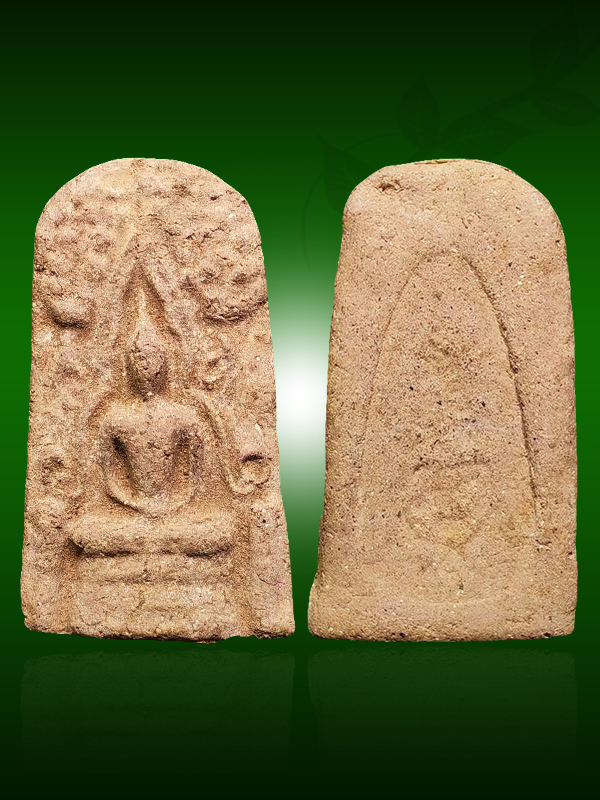
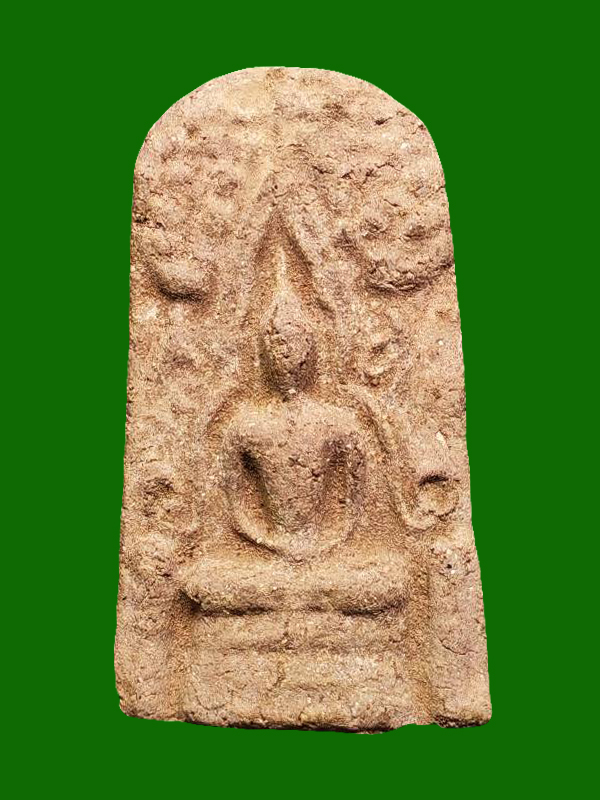
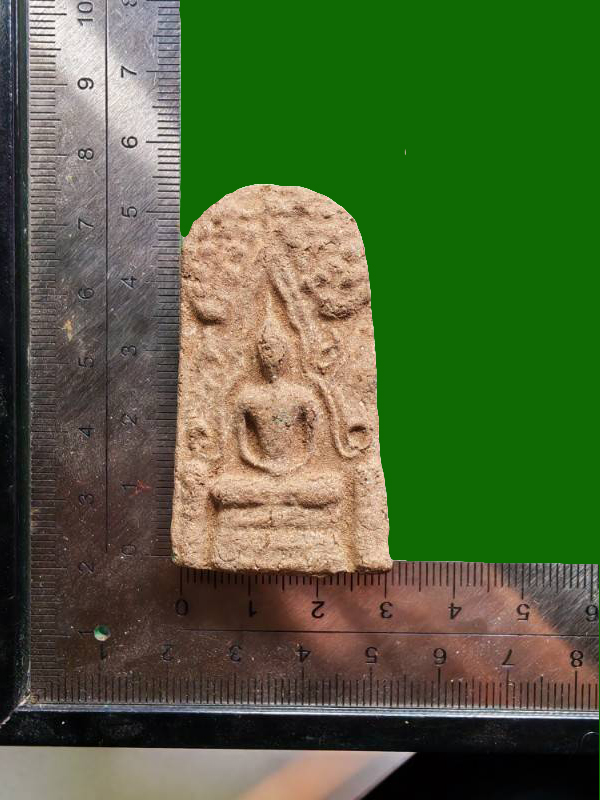
Phra Nang Tra Lp Paladpaisarn Wat Tapho B.E.2485
- Made of herbs
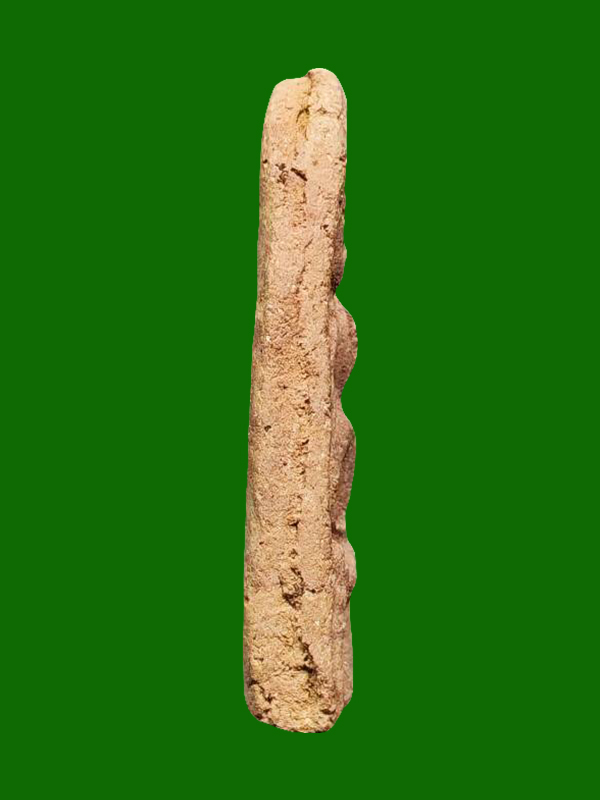
- Nice condition
- Phim Jumbo
- Lp Klai Wat Suankhan chanted together
- Guarantee real 100%
History and Creation Details of Phra Nang Tra, Chao Khun Plad Phaisan, Wat Tha Pho, Earth-Waan Material, B.E. 2485
The Phra Nang Tra (also known as Phra Nang Tra with yantra back, or Nang Tra mold) created by Chao Khun Phaisan (Phra Raj Phaisan Muni, or Chao Khun Plad Phaisan) of Wat Tha Pho, Tambon Tha Wang, Mueang District, Nakhon Si Thammarat Province, is an important amulet batch made primarily in B.E. 2485 (some sources note the main period as 2485, with possible extensions into nearby years). He was a strict Dhammayut monk adhering closely to the Vinaya, and a direct disciple of the renowned southern guru Chao Khun Muang (Phra Rattanatham Muni).
Background of Creation In late B.E. 2484, the ancient crypt (gru) at Wat Phra Nang Tra (or Wat Nang Tra) was opened, revealing a large quantity of ancient buried amulets and sacred black waan (waan ya dam, a holy medicinal herb) buried within. Chao Khun Phaisan collected a large amount of broken and damaged Phra Gru Nang Tra pieces from this excavation, along with the black waan ya discovered in the crypt. He mixed these with other sacred powders to recreate new amulets, modeling them after the ancient Phra Gru Nang Tra designs. This was done to produce sacred objects for worship and distribution to devotees.
He created several molds, primarily focusing on the “Phra” mold (Nang Tra form) and other molds imitating various ancient crypt styles from across Thailand. The creation occurred during World War II, giving this batch its characteristic intense spiritual power, especially in metta mahaniyom (great charm and loving-kindness), klaew klad (evasion of danger), and kongkraphan mahaut (great invulnerability)—hallmarks of southern amulets, derived from the waan ya herbs and sacred powders incorporated.
Earth-Waan Material (Main Content of This Batch) The waan material or earth mixed with waan is the most popular and sought-after content in this series. Chao Khun Phaisan used black waan ya from the Wat Phra Nang Tra crypt, blended with old broken Phra Gru pieces (especially Nang Tra Gru), and sacred earth powders from ancient crypts in Nakhon Si Thammarat and other provinces nationwide. After molding and firing, it becomes hard, durable fired earth, often reddish-brown or deep black depending on the kiln fire. Many pieces show clear traces of waan ya residue or old powder, making this material extremely rare and highly revered among southern devotees for its strong sacred efficacy.
Molds (Phim)
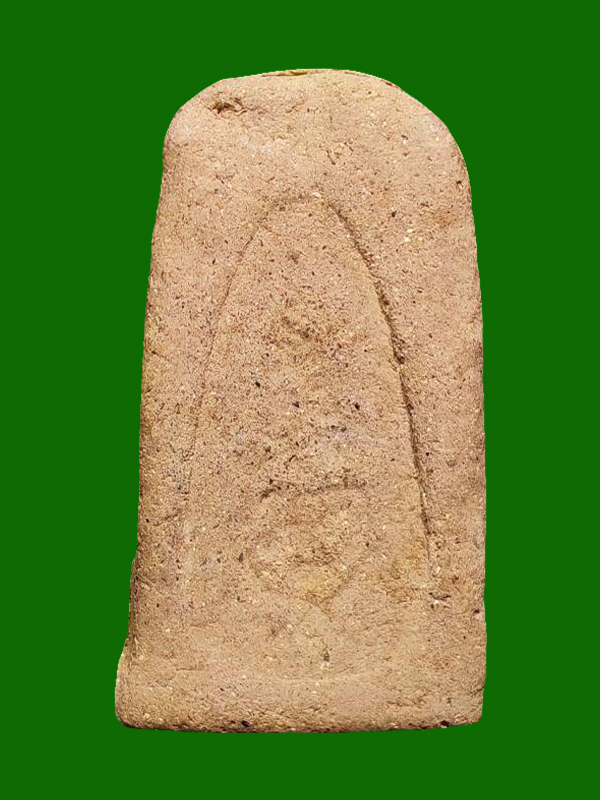
- The main mold is Phra Nang Tra with yantra back (back stamped with yantra), the most popular and sought-after, available in large and medium sizes, with clear or variant yantra backs.
- Other molds imitate various crypt styles, such as Phra Gru Nang Tra, Phra Nak Prok (some called Nang Tra Nak Prok), Phra Tha Ruea (boat style or Tha Ruea Gru), Phra Chinarat Tha Ruea, etc.
- Most backs feature stamped yantra or inscribed yantra; some have halos or special designs, which are rare.
Consecration and Quantity Chao Khun Phaisan led the monastic side of the consecration (in some related batches, he collaborated with Ajarn Chum Chaikiri). No exact quantity is recorded, but production was limited due to wartime conditions and the use of rare ancient crypt materials. This batch is considered a “lensed crypt imitation” (not original ancient Gru, but faithfully molded after crypt originals), carrying powerful blessings inherited from the ancient southern Nang Tra Gru. It is highly famous among collectors and devotees who favor the southern lineage.
พระนางตรา เจ้าคุณปลัดไพศาล วัดท่าโพธิ์ เนื้อว่าน ปี 2485 的历史与制作详情(中文翻译)
พระนางตรา(也称为พระนางตราหลังยันต์,或พิมพ์พระกรุนางตรา)由 เจ้าคุณไพศาล(พระราชไพศาลมุนี,或เจ้าคุณปลัดไพศาล)于泰国那空是贪玛叻府(Nakhon Si Thammarat)市政区 Tha Wang 子区 วัดท่าโพธิ์ 寺院所制作,是佛历 2485 年(公元 1942 年)的重要护身符系列(部分资料以 2485 年为主,可能延伸至附近年份)。他是泰国上座部(Dhammayut)严守戒律的僧侣,为南方著名高僧 เจ้าคุณม่วง(พระรัตนธัชมุนี)的直系弟子。
制作背景 佛历 2484 年底,那空是贪玛叻的 วัดพระนางตรา(或称วัดนางตรา)古塔(gru,古佛塔地宫)被开启,发现大量古代埋藏佛像以及埋藏其中的神圣黑草药(ว่านยาดำ,waan ya dam,一种圣药草)。เจ้าคุณไพศาล 收集了大量从地宫中出土的破碎、损坏的พระกรุนางตรา 佛像碎片,以及同时挖掘出的ว่านยาดำ。随后,他将这些材料与其他圣物粉末混合,重新制作新佛像,仿照古代พระกรุนางตรา 的样式,作为供奉与分发给弟子的圣物。
他制作了多个模具,主要以“พระ”模具(นางตรา 造型)为主,并仿制泰国各地不同古塔的样式。此次制作发生在第二次世界大战期间,因此这一批护身符带有强烈的灵力特色,尤其在 metta mahaniyom(大慈悲与人缘魅力)、klaew klad(避险逃难)、kongkraphan mahaut(大刀枪不入)等方面特别突出,这是南方护身符的典型特征,源自所加入的草药与圣粉。
เนื้อว่าน(本批次主要材质) ว่าน材质或土质混合ว่าน 是本系列最受欢迎且最珍贵的材质。เจ้าคุณไพศาล 使用来自วัดพระนางตรา 地宫的黑ว่านยาดำ,混合古代破碎的พระกรุนางตรา 以及来自那空是贪玛叻府及其他泰国各省古塔的圣土粉末。成型后经窑烧,成为坚硬耐用的烧制土质,常呈现红褐色或深黑色(视窑火而定)。许多佛像表面可见明显的ว่านยา 残留或旧粉痕迹,这种材质极为稀有,在南方信众中被视为极具神圣力量。
模具样式(Phim)
- 主要模具为 พระนางตราหลังยันต์(背面压印符咒),最受欢迎且需求最高,有大尺寸与中尺寸,符咒清晰或变体。
- 其他模具仿制各种古塔样式,例如:พระกรุนางตรา、พระนาคปรก(部分称为นางตรา นาคปรก)、พระท่าเรือ(船形或ท่าเรือ 古塔式)、พระชินราชท่าเรือ 等。
- 背面大多压印或手写符咒(ยันต์),部分带有光环或其他特殊设计,属于稀有款。
加持与数量 由เจ้าคุณไพศาล 担任僧团加持的主持(部分相关批次曾与 Ajarn Chum Chaikiri 合作)。没有确切的制作数量记录,但因处于战争时期且使用稀有古塔材料,产量有限。此批次属于“仿古塔模具”(非真正古塔出土,而是忠实仿制古塔样式),传承自南方古代นางตรา 古塔的强大佛力,在喜爱南方系护身符的收藏家与信众中极负盛名。


