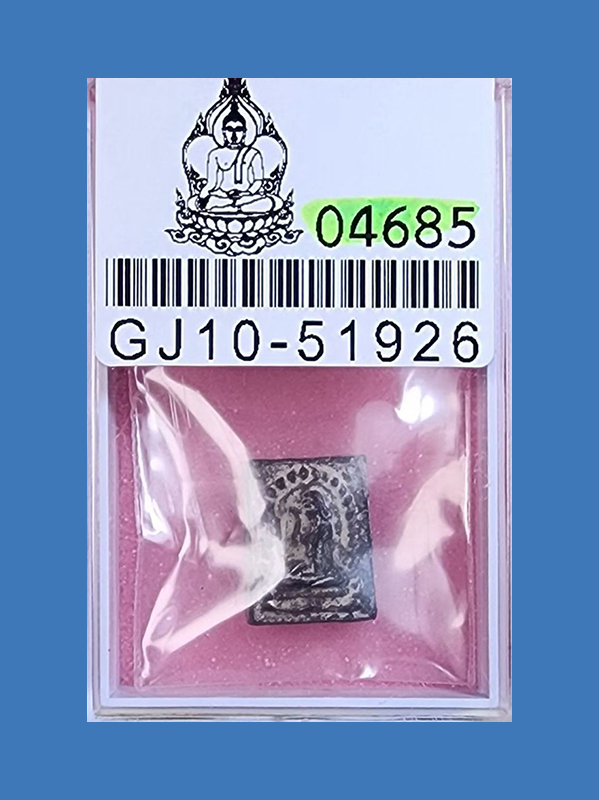
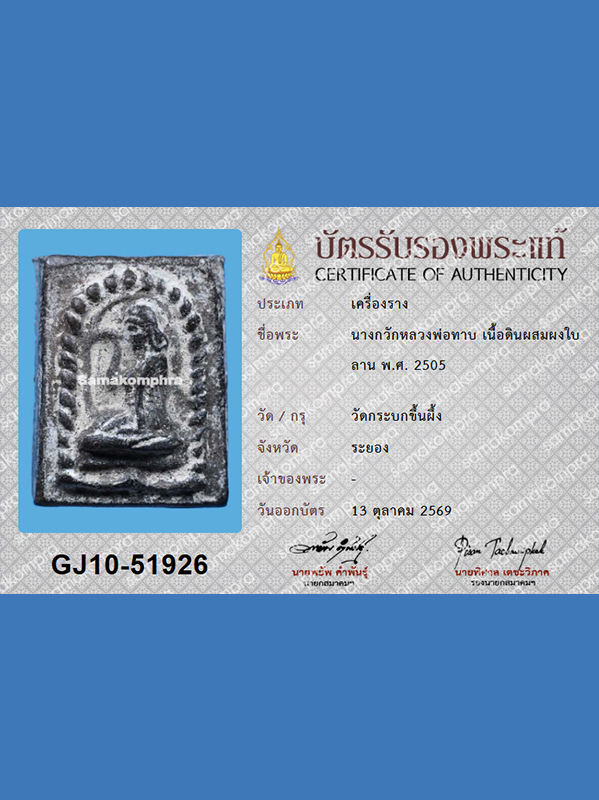
Description
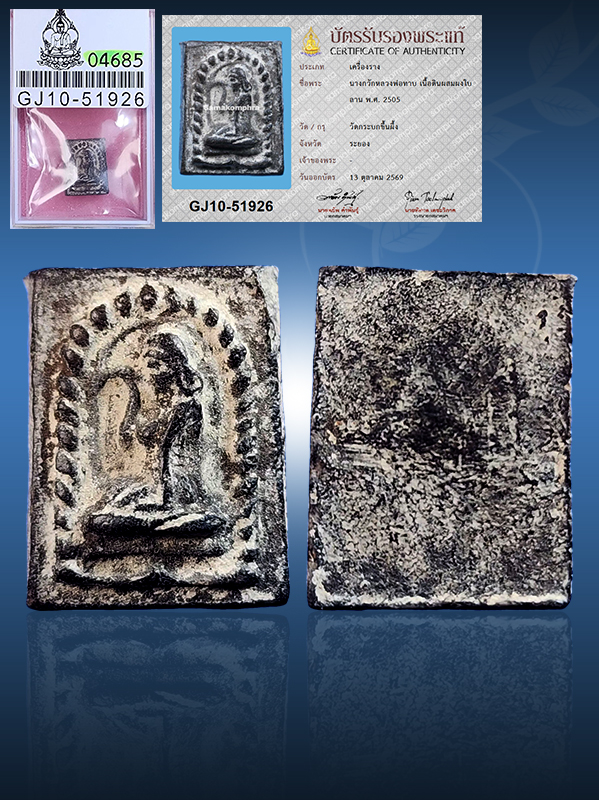
Nang Kwak Lp Tarb Wat Krabokkeunpeung B.E.2505
- Made of soiled mixed with sacred powder (Bailan)
- Nice condition
- Power for bring wealth
- With SMK cert
- Guarantee real 100%
Nang Kwak Amulet of Luang Por Tarb (B.E. 2505 / 1962)
Historical Background
- Luang Por Tarb created this Nang Kwak amulet in 1962 at Wat Krabok Khuen Phueng, Rayong Province.
- The project formed part of a major temple merit-making initiative and became one of the most recognized amulet issues from the temple.
- Ajarn Pathom Artsakorn assisted with preparing the sacred powders, blending the ingredients, and pressing the molds.
- Collectors usually place this amulet among the most desirable creations of Luang Por Tarb alongside his Somdej, Pidta, and Nang Phaya amulets.
Sacred Ingredients
The amulet incorporates a blend of traditional sacred materials, including:
- Sacred powders preserved by Luang Por Tarb
- The monk’s famous Green Beeswax
- Pathamang powder
- Itthije powder
- Burnt palm-leaf scripture powder
- Sacred powders from respected Eastern Thai monks
- Blessed ritual earth
- Yogi Halep powder from Wat Saranat
- The inclusion of Green Beeswax gives the amulet a strong connection to the spiritual legacy of Luang Por Targb
Consecration Ceremony
- Luang Por Tarb performed an extended solo consecration throughout an entire Buddhist Lent period.
- He later organized a grand blessing ceremony at Wat Krabok Khuen Phueng.
- Luang Pu Tim Isariko of Wat Lahan Rai presided over the ceremony.
- Distinguished monks from Rayong joined the ritual, including:
- Luang Por Hom of Wat Sak Mak
- Luang Por Yen of Wat Ban Laeng
- Luang Por Lad of Wat Nong Krabok
- The gathering of several renowned monks helped establish this amulet as one of the notable Rayong issues of its era.
Design and Characteristics
- Produced in several sizes, including large, small, and miniature versions.
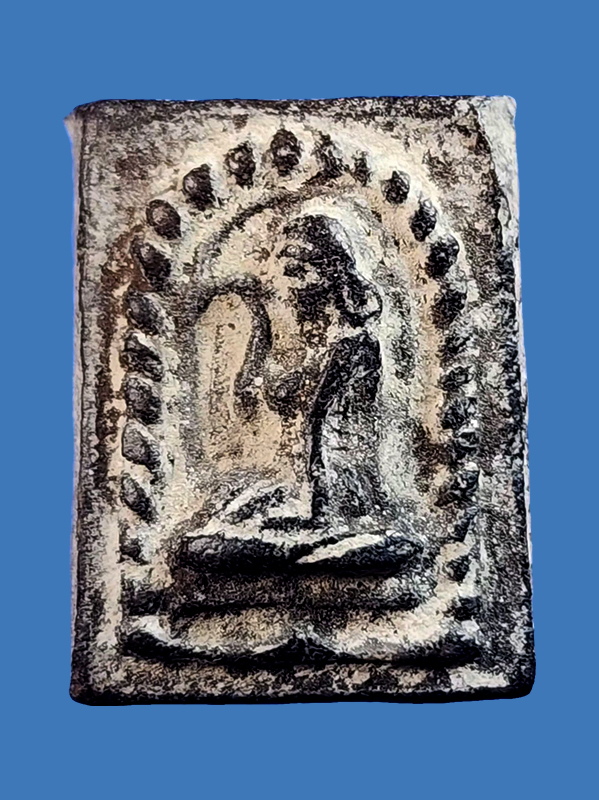
- Crafted from clay mixed with sacred powders.
- Some examples feature a traditional black lacquer coating.
- The front depicts Nang Kwak seated gracefully with the right hand raised in a beckoning gesture.
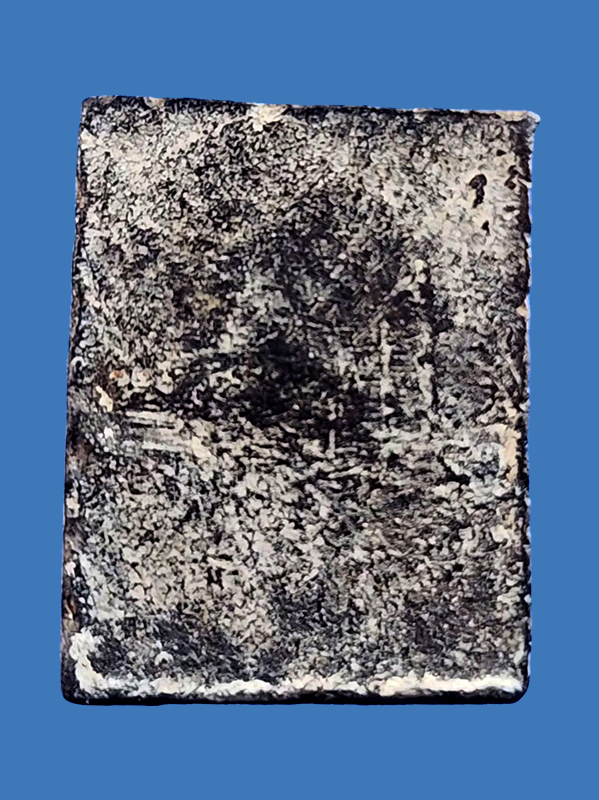
- The reverse side is usually plain and often preserves marks from traditional hand-pressed production.
Spiritual Significance
According to traditional belief, devotees value this amulet for:
- Personal charm and popularity
- Business growth
- Customer attraction
- Negotiation and communication
- Wealth and prosperity
- Protection and safe travel
- Shop owners and merchants especially favor this Nang Kwak issue for its long-standing reputation in commerce and trade.
龙婆塔布(Luang Por Tarb)南卦女神圣物(佛历2505年 / 1962年)
历史沿革
- 龙婆塔布于1962年在瓦甲博坤蓬寺(Wat Krabok Khuen Phueng)制作这批南卦女神圣物。
- 寺院在筹办大型功德活动期间推出此批圣物,并逐渐成为寺内最具代表性的作品之一。
- 阿赞巴通(Ajarn Pathom Artsakorn)负责协助调配圣粉、混合原料及压模制作。
- 收藏界普遍将其列为龙婆塔布最受欢迎的圣物系列之一,与崇迪、必打及南帕雅等作品齐名。
圣料传承
主要圣料包括:
- 龙婆塔布珍藏圣粉
- 龙婆塔布著名绿色圣蜡(Green Beeswax)
- 巴通芒圣粉(Pathamang)
- 伊提杰圣粉(Itthije)
- 贝叶经灰粉
- 泰国东部高僧传承圣粉
- 吉祥圣土
- 萨拉纳寺(Wat Saranat)的瑜伽哈勒圣粉
- 绿色圣蜡是本期圣物最具代表性的圣料之一,也体现了龙婆塔布法脉特色。
开光加持
- 龙婆塔布先行独自加持整个安居期。
- 随后在瓦甲博坤蓬寺举行大型开光法会。
- 龙婆添·依沙利果(Luang Pu Tim Isariko)担任法会主持。
- 参与法会的知名高僧包括:
- 龙婆宏(Luang Por Hom),萨玛寺(Wat Sak Mak)
- 龙婆燕(Luang Por Yen),班朗寺(Wat Ban Laeng)
- 龙婆叻(Luang Por Lad),农甲博寺(Wat Nong Krabok)
- 多位罗勇府名僧共同参与加持,使本期圣物成为当地佛牌发展史上的重要作品之一。
外观特征
- 分为大模、小模及迷你版本。
- 采用掺入圣粉的泥质材料制作。
- 部分版本带有传统黑漆涂层。
- 正面为南卦女神端坐招财造型,右手作招揽财富之姿。
- 背面多为素面,并保留传统手工压模痕迹。
信仰寓意
传统信仰认为,此圣物有助于:
- 增强人缘魅力
- 促进生意发展
- 吸引顾客上门
- 提升沟通与谈判能力
- 招财纳福
- 保平安与出行顺利
- 经商人士尤其重视此圣物,并将其视为招财旺业的吉祥象征。