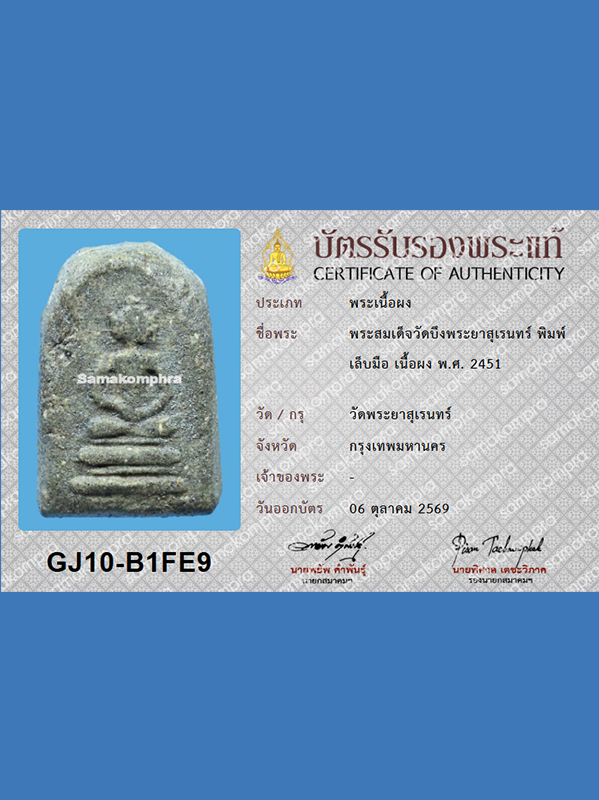
Description
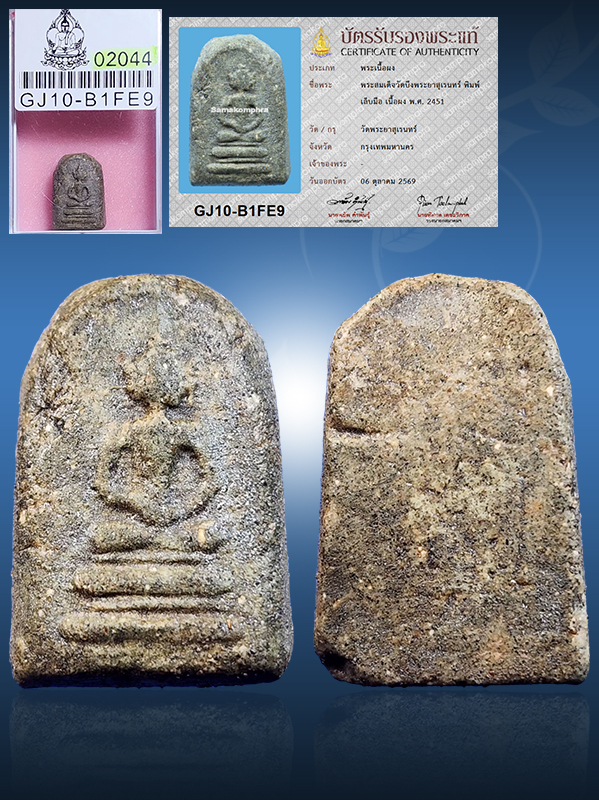
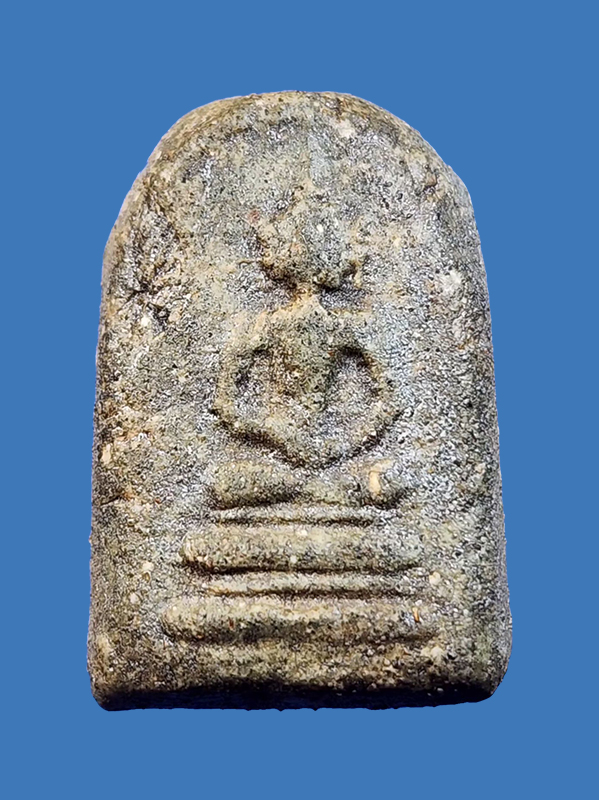
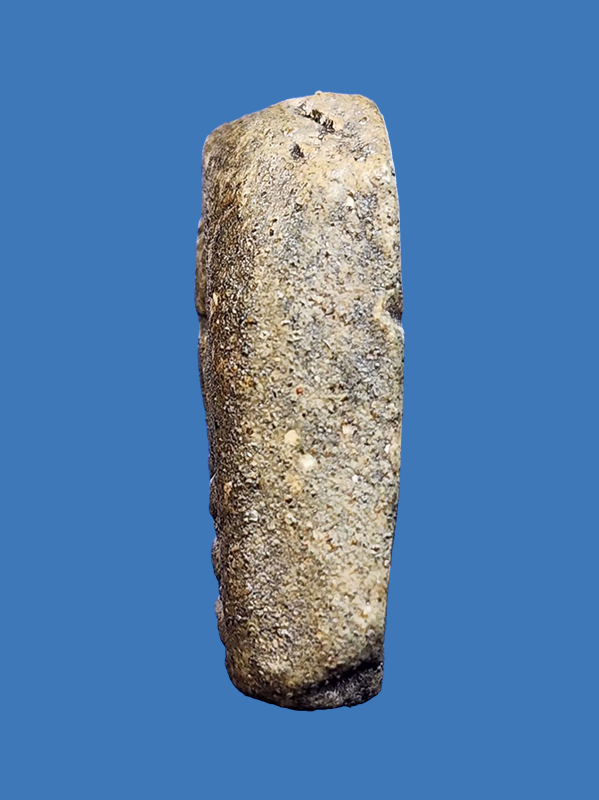
Phra Somdej Wat Bueng Phraya Suren B.E.2451
- Made of Sacred powder
- Fingernail Mold (Phim Leb Mue / Soom Kor style)
- Nice condition
- Powerful for protection
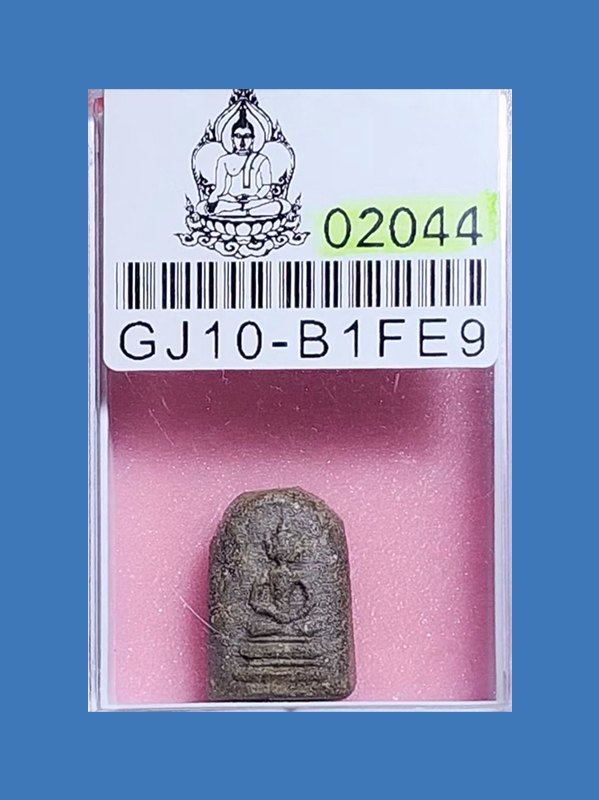
- With SMK cert
- Guarantee real 100%
History and Creation Details of Phra Somdej, Wat Bueng Phraya Suren (Fingernail Mold, Powder Material, B.E. 2451 / 1908 A.D., Bangkok)
1. Creator and Motive for Creation
-
Creator: Chaophraya Suren Ratchasena (Phueng Singhaseni), son of Phraya Mukmontri and grandson of Chaophraya Bodindecha (Singh Singhaseni), a chief military commander during the reign of King Rama III. He founded Wat Bueng Phraya Suren around the late reign of King Rama V (approx. 1887–1897 A.D.).
-
Objective: To preserve Buddhism following the ancient tradition of creating sacred amulets for enshrinement in pagodas or distribution to merit-makers. Chaophraya Suren Ratchasena created and consecrated this batch of amulets alongside renowned senior monks of that era, such as Luang Pu Thong of Wat Ratchayotha.
2. Creation Timeline and Period (Around B.E. 2451 / 1908 A.D.)
-
Period: Crafted during the late reign of King Rama V, these amulets were progressively produced and stored within the temple grounds, including beneath the main Buddha image’s base and inside the pagoda by the marsh.
-
Timeline Note: The amulet community commonly dates the production and era of these amulets to the early 20th century (with B.E. 2451 serving as a key benchmark period) prior to their formal discovery and opening of the pagoda depositories.
3. Characteristics of the “Fingernail Mold” (Phim Leb Mue)
Accepted as standard collector items, Phra Somdej amulets from Wat Bueng Phraya Suren feature 5 main molds:
-
Somdej with 3-Tiered Throne (Phim Than Sam Chan)
-
Somdej with Reinforced Base (Phim Than Saem)
-
Somdej with Bodhi Tree (Phim Prok Pho)
-
Phra Chao Ha Phra Ong (Most Popular / Five Buddhas)
-
Somdej Fingernail Mold (Phim Leb Mue / Somdej Suem Ko style)
-
Physical Characteristics: The amulet features a curved contour resembling a fingernail (or Phim Sum Ko in powder form). Enclosed within the arch is a Buddha image in the subduing Mara posture, featuring intricate details characteristic of ancient amulet craftsmanship.
-
Material Composition and Color:
-
Composed of medium-fine sacred powder.
-
Notable for its distinctive green color (resembling traditional Thai Khanom Piak Poon dessert or dark green/light banana leaf green). Some pieces may appear in yellowish or grayish tones.
-
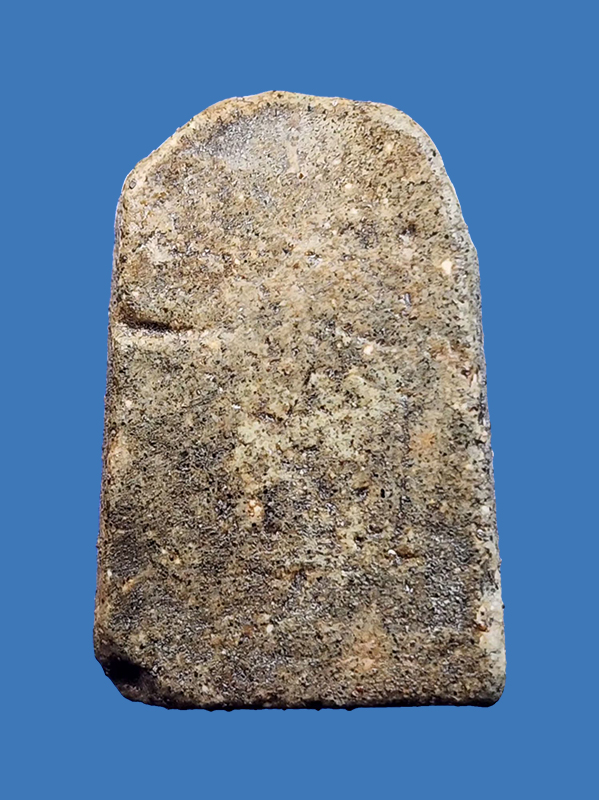
Natural Aging: Nearly all pieces exhibit natural hairline fractures, shrinkage lines, and weathering typical of a century-old powder amulet. Most pieces feature ancient sacred script inscriptions (Yant) hand-engraved on the back by master monks, with varying handwriting styles.
-
4. Discovery and Opening of the Amulet Depositories (Krusing)
The amulets were officially discovered and unearthed in two major events:
-
First Discovery (B.E. 2485 / 1942 A.D.): Unearthed from the deteriorating pagoda by the marsh. Amulets from this batch generally feature minimal deposit residue or a light powdery film.
-
Second Discovery (B.E. 2512 / 1969 A.D.): The temple officially opened the depository beneath the principal Buddha image’s base inside the ubosot (ordination hall). Amulets from this batch typically feature a creamy-white or heavier layer of natural cave/depository crust covering the entire surface.
5. Sacred Blessings and Auspicious Powers (Phuttakhun)
Renowned and highly celebrated for invulnerability and invincibility (Kongkrapan Chatri and Maha Utsam), which became famously proven during the Indo-China War and World War II. They are also well-regarded for great mercy, charm, and prosperity, aligning with the founder’s original dedication to supporting the Buddhist religion.
泰国苏连 Phra Somdej 佛牌历史与制作资料(佛历 2451 年 / 公元 1908 年,曼谷)
1. 督造者与督造缘起
-
督造者: 昭披耶苏连拉差色那(Phueng Singhaseni),帕雅穆蒙特里(Phraya Mukmontri)之子,拉玛三世时期著名统帅昭披耶博丁德差(颂·辛哈塞尼)之孙。他于拉玛五世统治晚期(约佛历 2430–2440 年间)创建了汶帕亚苏连寺(Wat Bueng Phraya Suren)。
-
督造目的: 遵循古代佛教传统,为了护持佛教而督造佛牌,用于藏入佛塔或结缘给参与功德的信众。昭披耶苏连拉差色那与当时多位声名显赫的高僧(如瓦拉差约塔寺的龙普通)共同督造并加持了这批佛牌。
2. 督造时间与背景(约佛历 2451 年 / 公元 1908 年)
-
时间背景: 制作于拉玛五世晚期,当时陆续督造并存放于寺庙内,包括大雄宝殿主佛座下以及湖畔佛塔内。
-
年代考证: 佛牌界通常将这批佛牌的诞生与入塔期归类于 20 世纪初期(部分文献或收藏界标注佛历 2451 年左右为核心活跃期),早于后来的正式开塔期。
3. “指甲模”(Phim Leb Mue)特征
获佛牌界公认为标准收藏的屈汶帕亚苏连 Phra Somdej 共有 5 大经典模具:
-
三层法座模(Phim Than Sam Chan)
-
加厚/双层法座模(Phim Than Saem)
-
菩提树模(Phim Prok Pho)
-
五佛尊模(Phim Chao Ha Phra Ong / 最受欢迎)
-
指甲模 / 莲花模(Phim Leb Mue / 类似顺德苏阔模)
-
模具外观: 佛牌轮廓呈圆弧形,酷似手指甲(或类似粉质的爽古模)。拱门内端坐着降魔印佛陀,线条细节展现了古代精湛的工艺水平。
-
材质与颜色:
-
采用中细质地的圣粉混合料。
-
最大特色为“绿色肉质”(酷似传统泰式椰汁糕皮糕粉的颜色,或深绿/嫩芭蕉绿)。部分佛牌可能呈偏黄或灰调。
-
自然老化痕迹: 近百年历史的粉牌几乎每一尊都会呈现自然的干裂纹、收缩线及风化痕迹。此外,绝大多数佛牌背面均有高僧亲手刻写的古符文(Yant),其书法笔迹各具特色。
-
4. 开塔历史(Krusing)
这批佛牌历史上曾经历过两次大型开塔:
-
第一次开塔(佛历 2485 年 / 公元 1942 年): 从损毁的湖畔佛塔中取出。此批佛牌表面通常附着较少的出塔土或仅有一层薄薄的粉霜。
-
第二次开塔(佛历 2512 年 / 公元 1969 年): 寺庙正式开启大雄宝殿主佛座下的藏经/藏宝基座。此批佛牌表面通常覆盖着较厚的乳白色或米黄色出塔结晶层(古庙土及矿物结晶)。
5. 圣物功效(Phuttakhun)
在刀枪不入与金刚不坏(Kongkrapan Chatri 与 Maha Utsam)方面享有极高的盛誉与灵验口碑,其神迹在印度支那战争及第二次世界大战期间大放异彩。此外,也具备极佳的人缘魅力与招财纳福功效,完全符合督造者护持正法的初衷。